
Dharmendra Pradhan Resigns as India's Education Minister
Dharmendra Pradhan has resigned as India's Education Minister amid the 'Cockroach' protests over the NEET paper leak. Here's what happened and why.
CORPORATE LAWSSERVICESFAMILY LAWIPR
Sandeep Choudhary
7/25/20264 min read
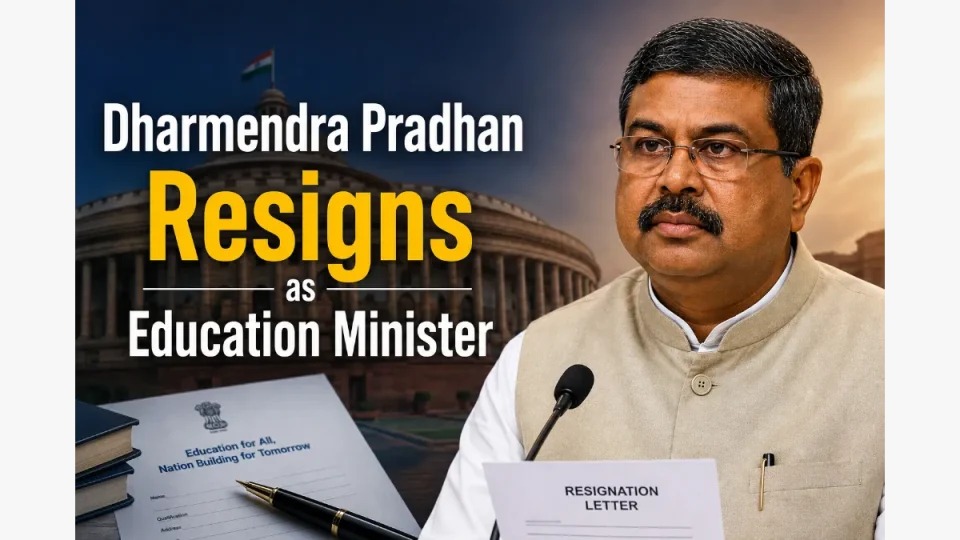
Dharmendra Pradhan Resigns as India's Education Minister Amid 'Cockroach' Protests
India's Union Education Minister, Dharmendra Pradhan, resigned on Saturday, 25 July 2026, becoming the first major concession from Prime Minister Narendra Modi's government after weeks of nationwide youth-led demonstrations demanding accountability over a major examination paper leak.
What Happened
Pradhan announced his resignation on X as police used tear gas to disperse protesters in New Delhi, just hours before protest leaders were due to hold another round of talks with federal ministers. In his post, Pradhan said he had sent his resignation letter to Prime Minister Narendra Modi, citing concern that the situation at the protest site could otherwise be exploited by hostile actors. He also said he did not want students to end up entangled in legal disputes instead of focusing on their studies and careers.
The resignation triggered celebrations among the thousands of protesters who had been camped at Delhi's Jantar Mantar for weeks.
The Root Cause: The 2026 NEET Paper Leak
The demonstrations were triggered by the cancellation of the National Eligibility cum Entrance Test (NEET), India's undergraduate medical entrance exam, after its question papers were found to have leaked. Around two million students sat the exam on 3 May, before it was scrapped — a decision linked to roughly a dozen student suicides.
The National Testing Agency cancelled the NEET-UG exams held on 3 and 7 May 2026, leading to a re-examination on 21 June and a CBI investigation. The re-test was conducted under heavy security, with the country's armed forces and state police deployed alongside biometric verification.
The 'Cockroach' Movement
The protests, known as the 2026 Delhi Jantar Mantar protests or the "Cockroach" protests, began on 6 June 2026, led by a youth movement called the Cockroach Janta Party (CJP), alongside student organisations including the Students Federation of India and the All India Students Association. The movement started as an online satirical page created by digital strategist Abhijeet Dipke in May 2026 before growing into what several outlets have described as the largest youth uprising India has seen in over a decade.
The protests drew in opposition politicians and went viral on social media before turning confrontational on Delhi's streets. The movement gained further national attention after activist Sonam Wangchuk began an indefinite hunger strike at the protest site on 28 June, and was later hospitalised.
Alongside Pradhan's resignation, the CJP's demands included compensation for the families of students who died by suicide and the release of Wangchuk from hospital. Authorities in New Delhi responded to a major march toward Parliament by cutting mobile internet, erecting barricades, shutting metro stations near the protest site, and deploying riot police.
Pradhan's Position Before Resigning
Pradhan had firmly resisted calls to step down for weeks. He described the teachers implicated in the leak as figures who had betrayed their protective role, and praised the NEET re-exam as a success. As recently as days before his resignation, Pradhan had not responded to media questions on the matter, and the BJP had not made spokespeople available for comment.
This was not the first time Pradhan faced pressure over exam integrity. He faced similar calls to resign in 2024 following alleged irregularities in that year's NEET exam, remaining silent for over a week before addressing the allegations directly.
What Happens Next
Pradhan's resignation marks a significant political moment for the Modi government — its first major concession to a protest movement in this term. Whether it satisfies the broader set of demands raised by the Cockroach Janta Party, including compensation for affected families and structural reform of India's examination system, remains an open question. The government has not yet announced Pradhan's successor or outlined its next steps on examination reform.
Key Takeaways
Dharmendra Pradhan resigned as India's Education Minister on 25 July 2026, citing the "Cockroach" protest movement.
The protests were triggered by the leak and cancellation of the 2026 NEET-UG medical entrance exam, affecting roughly two million students.
The "Cockroach Janta Party" movement began as online satire in May 2026 before becoming a sustained, month-long protest at Delhi's Jantar Mantar.
Activist Sonam Wangchuk's hunger strike, beginning 28 June, significantly escalated national attention on the protests.
Pradhan had resisted resignation calls for weeks before stepping down, a pattern echoing similar pressure he faced in 2024.
Broader protester demands — compensation for affected families and exam reform — remain unresolved as of his resignation.
Frequently Asked Questions
1. Why did Dharmendra Pradhan resign?
He resigned amid sustained nationwide protests demanding accountability for the 2026 NEET exam paper leak, stating he did not want the situation to be exploited by hostile actors.
2. What is the "Cockroach" movement?
A youth-led protest movement, formally the Cockroach Janta Party, that began as online satire in May 2026 and grew into sustained demonstrations at Delhi's Jantar Mantar.
3. What triggered the protests?
The National Testing Agency's cancellation of the 2026 NEET-UG medical entrance exam after its question papers were leaked, affecting around two million students.
4. Who is Sonam Wangchuk and why is he relevant to this story?
An activist and engineer who began an indefinite hunger strike at the protest site on 28 June 2026, significantly raising the profile of the demonstrations.
5. Did the government take other action besides Pradhan's resignation?
A re-examination was held on 21 June 2026 under heightened security, and a CBI investigation into the leak was launched.
6. Has Pradhan faced this kind of pressure before?
Yes he faced similar resignation calls in 2024 over alleged NEET irregularities that year.
7. What happens next?
As of Pradhan's resignation, the government had not announced a successor or a formal response to the protesters' remaining demands, including compensation and exam reform.