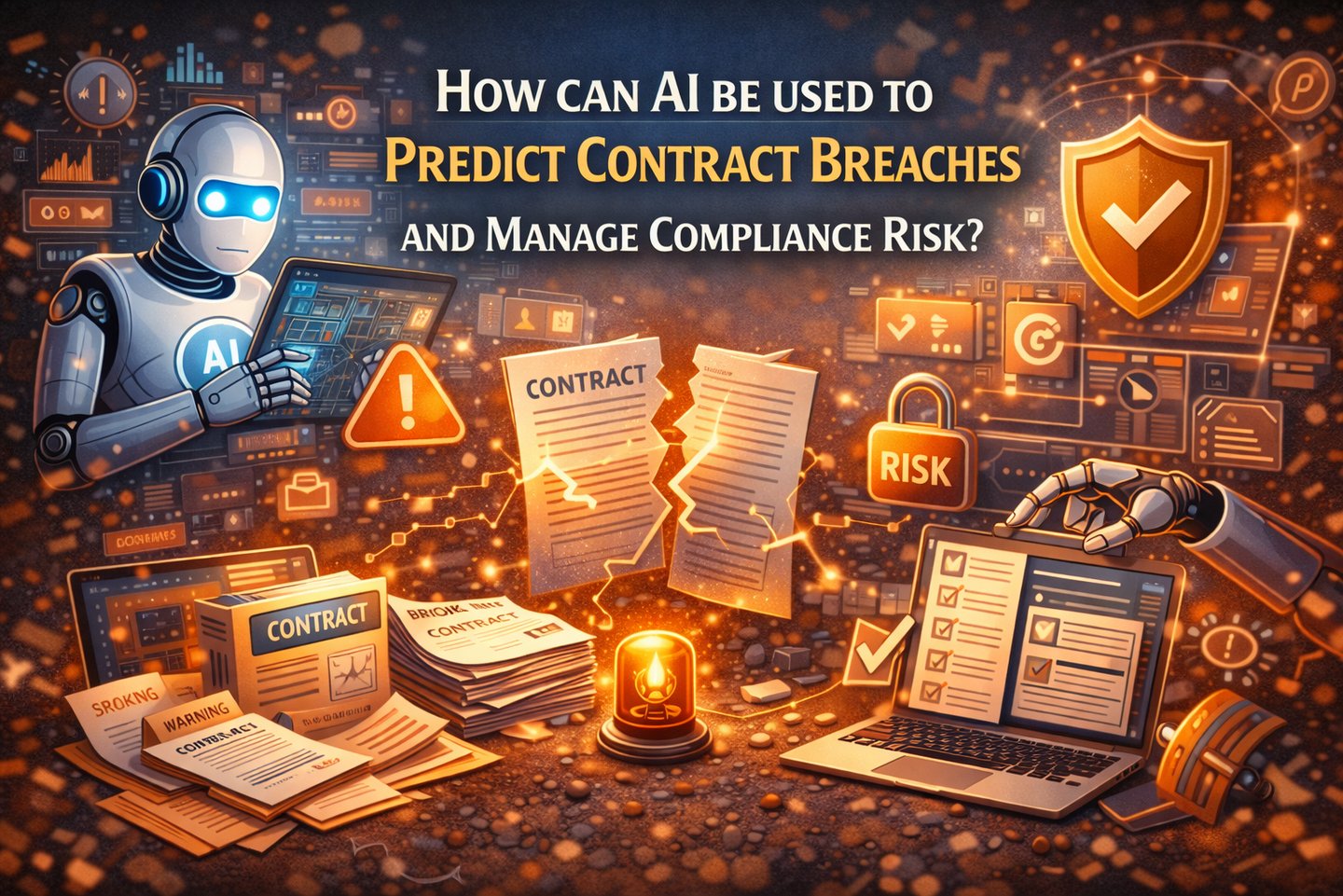
How can AI be used to predict contract breaches and manage compliance risk?
Artificial intelligence is changing contract management. It predicts potential breaches and manages compliance risks using predictive analytics, automation, and continuous monitoring. This approach helps reduce risks early and supports better decision-making.
CORPORATE LAWS
Aditi
2/19/20263 min read
Introduction
Businesses and people need contracts when they work together. Contracts say what people can and cannot do. They also say what happens when things go wrong. Good contract management helps everyone understand what they have to do. Nowadays there are a lot of contracts. There are also a lot of rules that people have to follow. Sometimes people do business with others in different countries. This makes it hard to use the ways of managing contracts. Just looking over contracts by hand. Checking them every now and then is not enough. People often do not see problems until it is too late. This can cause a lot of trouble, like arguments and problems with the law. Contracts can be managed better with artificial intelligence. With machine learning, natural language processing (NLP), and predictive analytics, AI helps organizations analyze large amounts of contract data, recognize risk patterns, and predict potential breaches before they happen. AI also supports ongoing compliance monitoring, ensuring that contractual and regulatory obligations are met in real time.
Predicting Contract Breaches Using AI
The thing about artificial intelligence in contract management is that it can see when something might go wrong. Artificial intelligence systems look at what happened in the past to find signs that something could be a problem, like parts of the contract that are not clear or deadlines that are not realistic, or when the other party has not followed the rules before. For example, artificial intelligence can point out contracts that have had problems with payments being late or deadlines being missed. Artificial intelligence gives a score to each contract or the other party in the contract to show how much risk is involved. This means that organizations can focus on the contracts that are more likely to have problems and do something about it, like changing the terms of the contract or watching things more closely. Artificial intelligence also looks at how people and companies behave to see if there are any patterns that might cause problems with the contract. If a supplier has previously struggled to meet obligations during market fluctuations, AI can predict similar risks in ongoing contracts under comparable conditions. This shift enables proactive risk management instead of reactive enforcement.
Managing Compliance Risk
Compliance management usually works by doing audits from time to time. This can be a problem because it may only find out about mistakes after they have already happened and caused trouble. Artificial intelligence changes this by letting us watch everything all the time. Artificial intelligence systems keep an eye on things like when reports are due, when things need to be renewed, what level of service is required, and what needs to stay secret. When something is about to be late or not done correctly, the system sends out alerts to the people who need to know. For example, if a contract says that something has to be done to a standard, artificial intelligence can watch the data and quickly point out if it is not being done correctly. This way compliance management is done with artificial intelligence, which is a big help. Artificial intelligence really makes a difference by letting us keep an eye on compliance all the time. In highly regulated industries like finance, healthcare, and energy, AI can connect regulatory updates with contract management systems. This ensures that contractual obligations keep pace with changing laws, greatly reducing the risk of accidental regulatory violations.
Improving Decision-Making and Risk Mitigation
Beyond identifying risks, AI helps with strategic decision-making. AI-generated insights assist legal teams in deciding whether to enforce, renegotiate, or terminate contracts. Predictive models can simulate possible outcomes of breaches, allowing organizations to consider financial and legal consequences in advance. AI-powered dashboards provide a complete view of an organization’s contract portfolio. They highlight high-risk contracts, compliance trends, and performance metrics. This visibility improves resource allocation and strengthens risk management throughout the organization.
Challenges and Ethical Considerations
For artificial intelligence to work properly, it needs quality information to learn from. If the information is not good or is missing some details, artificial intelligence can make wrong predictions. Legal language can be very tricky and depends a lot on the situation. It is hard for artificial intelligence tools to understand it correctly. When artificial intelligence generates reports on risks, it can be tough to explain how it arrived at those conclusions. This raises some concerns about being open and taking responsibility for what artificial intelligence does. People also worry about keeping information private and confidential because the information in contracts is very sensitive. Artificial intelligence deals with this information, so it is critical to handle it carefully. Therefore, human oversight is essential, and AI should serve as a supportive tool rather than replace legal judgment.
Conclusion
Artificial intelligence has the potential to transform contract management by predicting breaches and managing compliance risk in a proactive, data-driven manner. Through NLP, machine learning, and predictive analytics, AI enables early risk detection, continuous compliance monitoring, and informed decision-making. While challenges related to data quality, transparency, and ethics remain, a balanced approach that combines AI with human expertise can significantly improve contract governance. As AI continues to develop, its role in legal and compliance frameworks will become increasingly important.