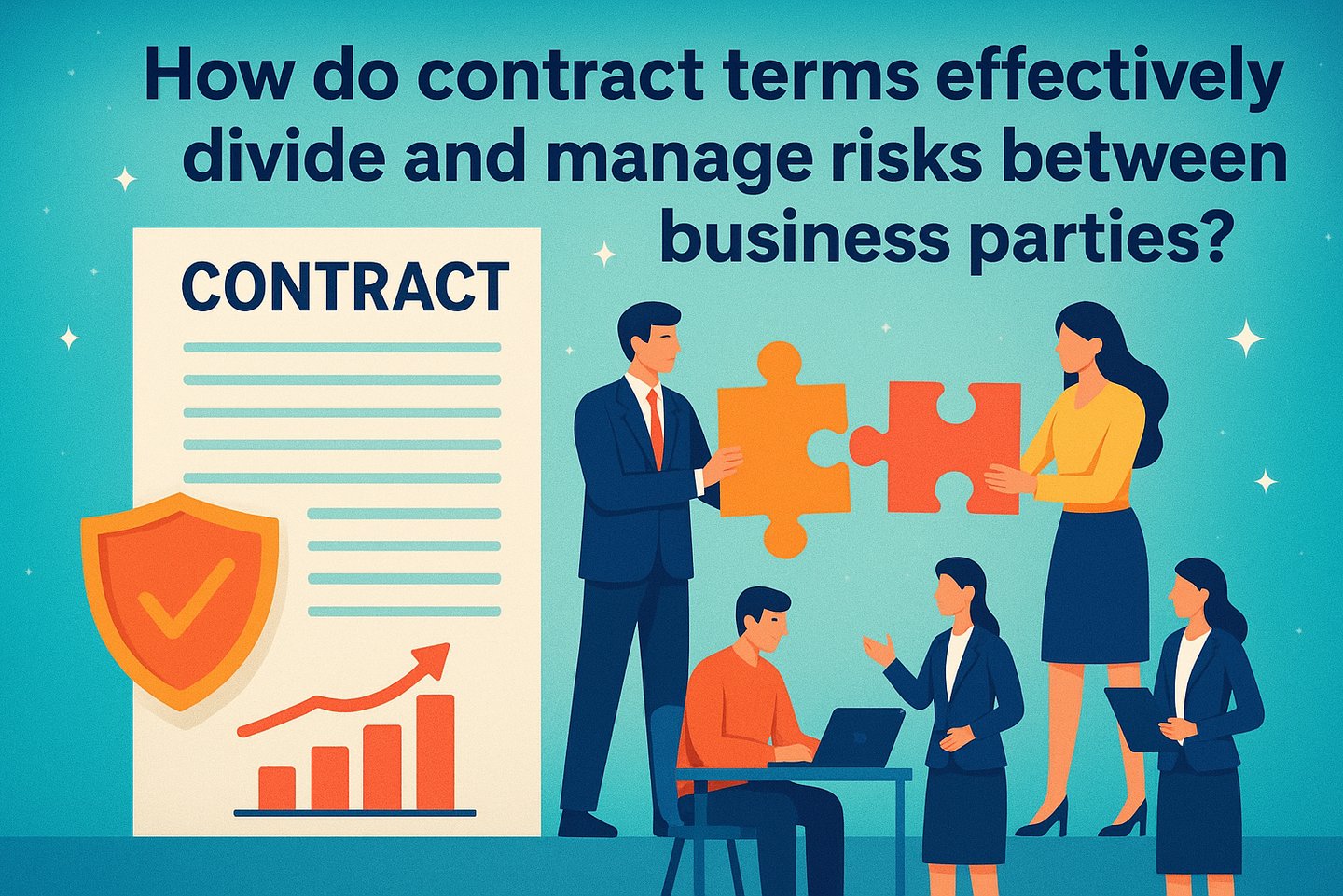
How do contract terms effectively divide and manage risks between business parties?
Contract terms help business partners share responsibilities, reduce uncertainty, and avoid disputes by clearly defining risks, duties, and remedies in advance.
CORPORATE LAWS
Saurabh Rajure
12/10/20254 min read
Introduction
Every business deal carries some level of risk. Companies enter agreements with expectations about performance, timelines, payment, and quality. But problems can arise at any stage—goods may get delayed, prices may increase, information may turn out to be false, or unexpected events may interrupt performance. Contracts help control these situations by putting rules and responsibilities in writing.
A well-drafted contract does more than record promises. It divides risks between the parties so that each side knows what they must handle and what they are protected from. This division creates stability, prevents confusion, and reduces the chance of disputes. This article explains how different contract terms help businesses manage risks effectively.
1. Contract Terms as Tools for Risk Allocation
Contract terms help parties predict how risks will be shared. Instead of arguing later, the agreement clearly states who will bear responsibility. This is essential because business risks can come from many sources—market changes, supplier delays, machine failures, legal restrictions, or errors by workers.
By allocating risks in advance, the contract gives both parties confidence to invest time, effort, and money. It also helps them plan insurance, set prices, and prepare for difficulties.
2. Representations and Warranties
Representations and warranties reduce the risk of false information. Representations are statements of fact made when the contract is signed. Warranties are promises that certain facts will remain true during the contract period.
For example, a seller may state that the goods are new, of a certain quality, and legally owned by them. If these statements turn out to be false, the buyer can demand compensation or cancel the deal.
These clauses shift the risk of inaccuracy to the party making the claim. They protect the other side from losses caused by misleading or incomplete information.
3. Indemnity Clauses
Indemnity clauses directly transfer the financial burden of certain risks from one party to another. When a party agrees to indemnify, they promise to compensate the other for specific losses.
For example, a contractor may agree to indemnify the client for any damage caused due to negligence by the contractor or their employees. That means if something goes wrong because of their mistake, they must bear the cost.
Indemnity clauses are common in construction, technology, outsourcing, leasing, and professional service contracts. They provide strong protection because they address specific risks in advance.
4. Limitation and Exclusion of Liability
While indemnity increases responsibility, limitation and exclusion clauses reduce it.
A limitation of liability clause fixes a maximum amount that a party must pay if they breach the contract. An exclusion of liability clause removes liability for certain types of losses, such as loss of profit or indirect damages.
These clauses help businesses avoid unpredictable or excessive financial exposure. Without them, even a minor mistake could lead to very high damage. However, these clauses must be clear and reasonable; otherwise, they may not be enforceable.
5. Force Majeure and Unexpected Events
A force majeure clause protects parties from events they cannot control. These events may include natural disasters, riots, wars, lockdowns, accidents, or new government restrictions.
The clause usually explains which events qualify as force majeure and what the affected party must do (notice, documents, etc.).
Whether performance will be paused or the contract will end. This clause avoids blame when the event is beyond human control. It helps parties handle disruptions smoothly and fairly.
6. Payment and Price Terms
Financial risks are managed through clear payment terms. These terms explain how much will be paid, when payment is due, and what method will be used.
Common ways payment terms reduce risk include advance payments, which protect sellers from non-payment. Installments that protect buyers from poor performance. Price adjustment clauses, which help deal with inflation, fuel increases, or rising costs of raw materials.
Clear payment rules prevent misunderstandings and cash-flow problems.
7. Delivery, Performance, and Quality Conditions
One of the most common risks in business deals is improper performance. To avoid this, contracts include detailed performance clauses.
These may cover delivery dates, product or service specifications, testing and inspection methods, procedures for rejecting defective goods, and penalties for delay.
When a contract spells out how and when things must be done, it becomes easier to measure performance and hold the responsible party accountable.
8. Confidentiality and Intellectual Property Protection
Many business relationships involve sharing confidential information—designs, formulas, customer data, software code, or marketing strategies. A confidentiality clause prevents misuse or disclosure of such information.
Similarly, intellectual property (IP) clauses clarify who owns the IP created during the project, how it may be used,Whether it can be transferred or licensed.
These clauses reduce the risk of leaking valuable information or having disputes over ownership.
9. Dispute Resolution Clauses
Even the best contract cannot prevent any disagreement. For this reason, contracts contain dispute resolution provisions.
These may include negotiation, mediation, arbitration, and court litigation in a chosen jurisdiction.
Arbitration is especially common in commercial contracts because it is faster and more private than court proceedings. These clauses help manage the risk of long, costly disputes and provide a clear roadmap for resolving issues.
10. Termination and Exit Mechanisms
Termination clauses explain when and how the parties can end the contract. They help control risks when the relationship becomes unworkable or when one party fails to perform.
Typical termination situations include serious breach of contract, insolvency of a party, convenience (ending without cause, sometimes with notice), and prolonged force majeure.
These clauses also state what happens after termination, such as final payments, return of materials, or transfer of documents. They prevent confusion when the contract ends.
Conclusion
Contract terms are essential tools for managing risks in business relationships. Through representations, warranties, indemnities, performance rules, payment terms, force majeure provisions, and dispute-resolution mechanisms, contracts give both parties clarity and security. When responsibilities are clearly divided, conflicts reduce, trust increases, and business transactions run smoothly. A well-structured contract not only protects parties from losses but also supports fair and stable cooperation