
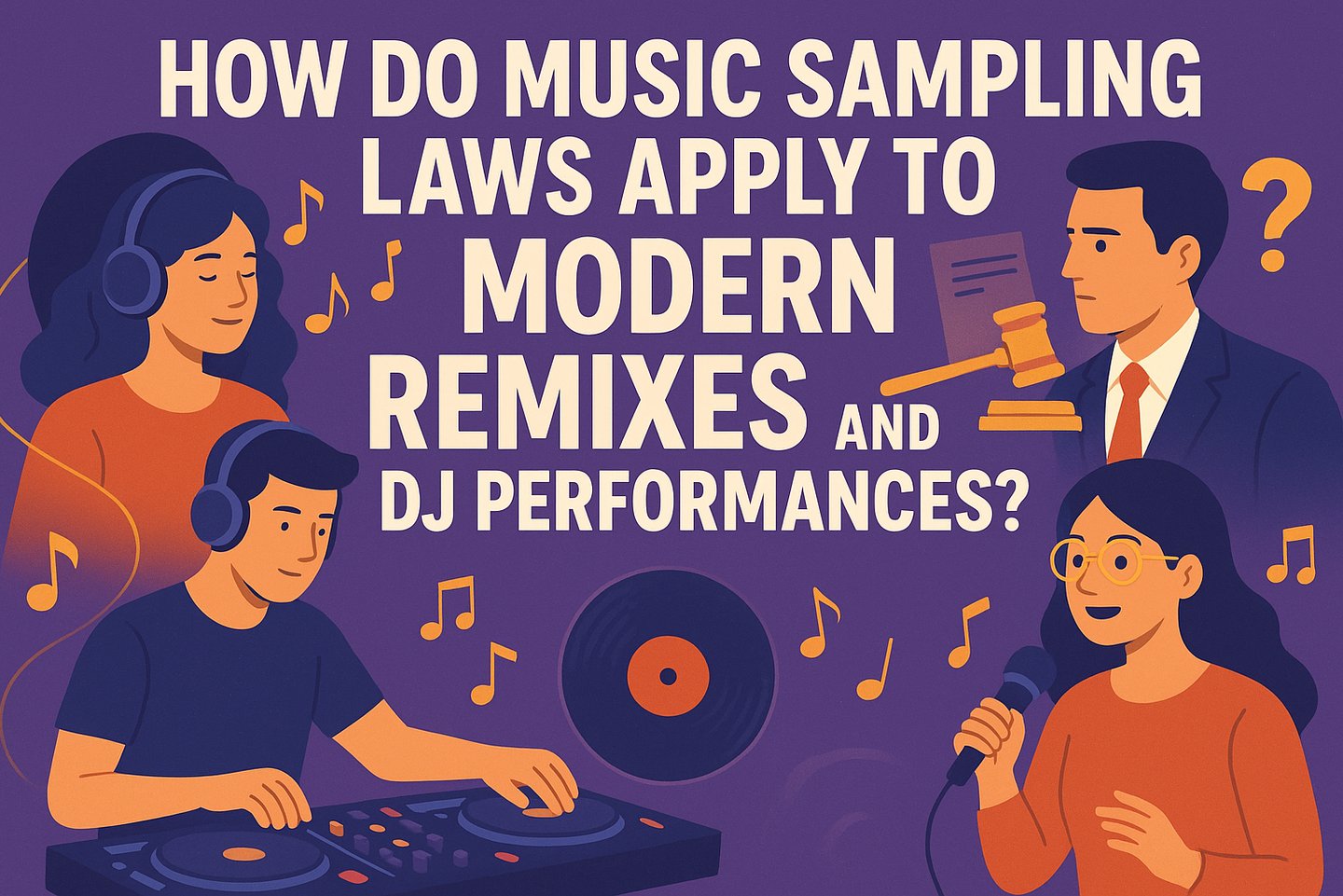
How do music sampling laws apply to modern remixes and DJ performances?
In the modern age, remix music and DJ performances are very popular among youngsters and attract significant public attention. The higher the public engagement, the more it can be used to monetize. Remix music and DJ performances are often heard at public events and live shows. But whether this new form of music is legally justified as copyrighted musical work is a significant question.
IPR
Ajay Vishwakarma
11/20/20254 min read
1. Is ‘Musical Work’ subject to copyright?
The Copyright Act, 1957, brings musical work into the domain of recognized forms of ‘work’ subject to copyright. ‘Musical work’ is any work that consists of music and also includes any graphical notation of such work. This excludes any action or word intended to be sung with the music or spoken or performed with music.
The adaptation of any musical work into any arrangement or transcription of the work needs prior license from the author, i.e., the composer. If the musical work is computer-generated work, then in that case, one first needs to have a prior license from the person who causes the work to be created. This implies that remixes are any rearrangement or alteration of the musical pieces of any original work.
Section 14 of the Indian Copyright Act grants all rights, including further development, translation, reproduction, publication, communication to the public, etc., exclusively to the original author of the work. Section 14(e) of the Copyright Act grants certain protections to the owner of a sound recording.
There is no copyright in a song, but the words of the song create a copyright for the author of the song, and the music of the song is the copyright of the composer. If the song is produced by a third person, then the copyright lies with the producer. In a case where a song is written and the music composed by the same man, he would own the copyright to the song.
2. Cover Song and Remix
A cover song is a new performance or recording of a previously released song by a person other than the original artist. Cover songs are often created by original creators to re-release the song with modernism to match with the current requirements for the entertainment industry. They are created and produced under the banner of the original producer or with prior license by the license holder of the copyright.
In contrast, a remix involves alteration or modification of an existing song by adding or changing elements like bass, beats, tempo, and other effects. In remix work, the characteristics of the original work are altered so as to make it more thrilling. Sometimes two or more musical works are mixed so as to create a more pleasant work for monetization. These mashups are often used for commercial purposes and thus require a license from the original creators. The creator of such a remix should make a prior agreement with the original creator and fix the royalties for the use of such musical work.
3. Issues with remix of copyrighted work
The moral and financial implications of not protecting the rights of the original author of the musical works that are sampled to create remixes contradict the interests of such authors. The "special rights" of an author, which are mentioned in section 57 of the Copyright Act, are a significant issue with the remixing of a work. According to this section, "Even after the assignment or the transfer of the copyright, the author shall have the right to claim the authorship of the work, and he can restrain or claim the damages for any distortion, mutilation, modification, or any other derogatory act if such acts are hampering the honor and reputation of the author before the expiration of the term of copyright."
4. License for use of any musical work
The owner of the copyright in any existing work or the prospective owner of the copyright in any future work may grant any interest in the right by license in writing by him or by his duly authorized agent, provided that in the case of a license relating to copyright in any future work, the license shall take effect only when the work comes into existence.
Sections 31C and 31D of the Act deal with the licensing of musical works for the purpose of creating cover versions and for broadcasting literary and musical works and sound recordings. They also provide provision of royalty to original creators. But the Act is silent upon how the royalty for work should be decided; it leaves the negotiation part up to the original creator and the remix artist.
5. Remixes and DJ performances
The remix and DJ performances, which are very popular among the young generation, are within the definition of adaptation of a musical work; such adaptation is not an infringement of copyright of the original musical composition and tells us that the artwork is still in development and progressing further. They need no license if used in private spaces or for educational purposes, as mentioned in Section 52 of the Act.
The Supreme Court, in its significant judgement in the case of Gramophone Co. of India Ltd. v. Super Cassette Industries, has held that the version recording, if done by a skillful and laborious rearrangement of different music with due permission of the original owner of the songs, may claim protection under the Copyright Act. For commercial use of work, it is advised to take prior permission to avoid future nuances.
6. Recommendations And Suggestions
The 2012 Amendment Act aimed to protect the interests of the authors, and thus, now the authors shall receive royalties from those who get the rights or license from the authors. The 2012 Amendment Act brought several changes in the rights of the performer, musician, and others associated with the music industry; however, it was not successful in addressing the issues revolving around the remix culture.
It is suggested that creators, before working on a remix, should do the following checks:
Give notice to original track owners.
Obtain expressed consent from owners to make the remix.
Payment of royalty to the owners.
Make sure proper credits are given to the original owners.
Conclusion:
Remixing of music samples from multiple musical works is in itself a new creation, which the creators argue to be protected under the copyright, but the Copyright Act 1957 does not provide any definition for the remix form of music. Also, it can be counterargued that to create such a remix, it could not have been created without the original work. The creator should take prior permission from the original creators of such musical works so as to avoid future litigation and damages against such remixes for financial loss of the original author. Only in circumstances where the author would be harmed by any distortion, modification, or other act related to the work are injunctions and monetary damages available under statute.