
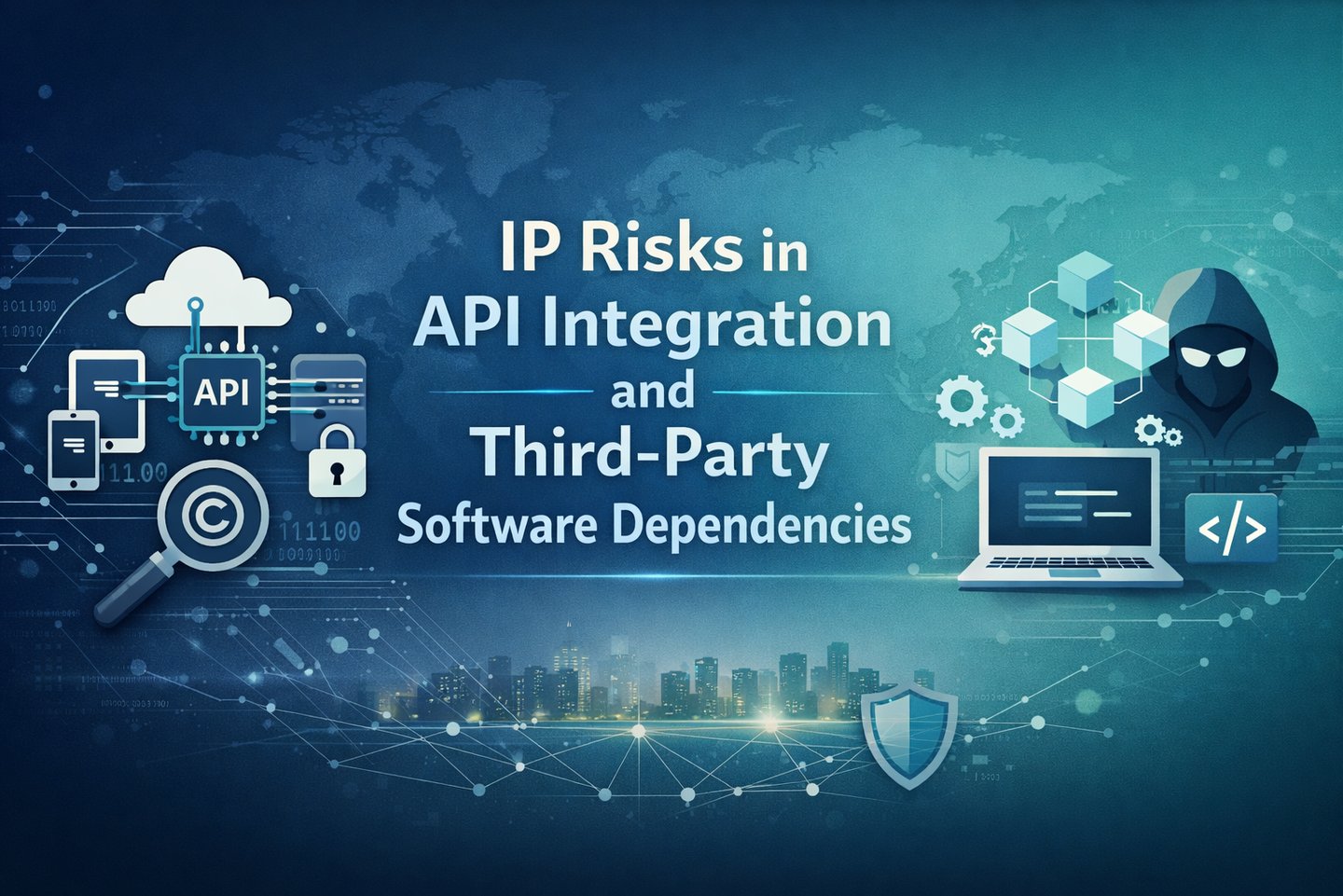
IP Risks in API Integration and Third-Party Software Dependencies
Modern applications depend on APIs and external software. But developers often ignore legal aspects, which creates intellectual property risks like license violations, ownership confusion, and possible business liabilities.
IPRCORPORATE LAWS
Vishesh
3/1/20263 min read
Introduction
In present time almost no software is fully created from scratch. Developers combine many ready-made services to save effort and time. When we open apps like shopping or food delivery, most features are not internally built but connected from outside. For example, login authentication, maps, storage, and payments usually work using APIs from companies such as Google, Microsoft, and Amazon Web Services.
This system makes development very fast. A small team can build a complex application easily. But the problem is many developers only think technically—whether code runs—and ignore whether they are legally allowed to use it. Many beginners assume if code is available online, then it is free. Actually, free access and legal permission are not the same. Because of this misunderstanding, many companies later face legal notices, product removal, or investor issues. So understanding IP risk in API integration is important for developers also, not only lawyers.
Understanding APIs and Dependencies
An API (Application Programming Interface) allows one program to communicate with another. Instead of writing every feature manually, developers request service from another server. Developers also download libraries from platforms like GitHub or open-source projects maintained by the Apache Software Foundation. These are called dependencies because your software depends on them to function. Most students only check whether the package works properly, not whether they are allowed to use it commercially. But every dependency carries its own legal terms.
Copyright Risks in Software
Software code is legally treated similarly to written text. Copying code without permission can be copyright infringement. In practice developers often copy small code solutions from internet forums to quickly fix errors. Later, when that software becomes a commercial product, ownership issues arise.
For example, suppose a company integrates database tools developed by Oracle beyond the permitted license scope. Even if the copied portion is small, liability may occur. Law focuses on permission, not quantity of copied code. Sometimes developers themselves don’t remember where certain code came from, but legal responsibility still exists.
Open-Source License Confusion
Open-source is commonly misunderstood. It does not mean public domain. Each open-source software contains a license explaining allowed usage. Some licenses are permissive, but others impose strict obligations. One example is the GPL license. If a GPL component is included inside proprietary software, the developer may be required to disclose the full source code publicly. For a business this can be a serious loss of competitive advantage. Even small requirements like attribution notices must be followed. Ignoring it technically becomes a violation. Many startups realize these issues only during funding due diligence.
API Terms and Contractual Restrictions
When developers use APIs like Google Maps Platform, they automatically accept the Terms of Service agreement. But realistically most people never read it. These agreements may restrict:
· storing data permanently
· redistributing results
· automated extraction
· commercial resale
Technically software may allow these actions, but legally they may be prohibited. If violated, the API provider can suspend service or claim damages. So technical access does not equal legal authorization.
Data Ownership and Privacy Issues
Another confusion arises regarding user data. When a company sends customer information to an analytics or AI service, that third party may also store or analyze data according to its policy. This creates uncertainty about ownership and confidentiality. If sensitive business data is uploaded externally, trade secret protection may be weakened. Once confidential information becomes accessible, legal protection becomes difficult. Developers usually think about performance but not data rights, which later becomes a compliance problem.
Hidden Dependency Chain
One major overlooked risk is indirect dependency. You install the library. A. Library A uses library B. Library B includes library C. Now your project includes C also without your knowledge. If C has a restrictive license, your project inherits obligations automatically. During legal audits, companies often discover unknown components inside their software. Fixing them after release is costly and complicated.
Patent Risks
Certain software functions are patented, like encryption or compression methods. Even without copying code, using patented technology without permission may cause infringement. Small companies generally cannot afford patent disputes. So they may remove the feature or settle legally. Although not discussed much in beginner courses, patent risk is a practical industry concern.
Business Consequences
Ignoring IP compliance leads to real problems:
· application removed from platform
· investors withdraw funding
· acquisition deals fail
· legal penalties
· forced code disclosure
Usually companies discover these issues during the legal verification stage, not during development. In my opinion early-stage developers focus too much on speed and ignore legal structure.
Risk Reduction Practices
Basic steps can reduce exposure:
· maintain list of all dependencies
· read license summary before installing the package.
· avoid blindly copying internet code
· check API usage rules carefully
· separate proprietary and external modules
· consult legal expert when unsure
Legal awareness should be part of the development process.
Conclusion
APIs and third-party software made development faster and more accessible. However, they also introduced intellectual property risks related to copyright, licensing, contracts, and patents. A program may function correctly but still be legally unsafe. Therefore developers must understand that availability of code does not mean ownership rights. With proper awareness and precaution, integration becomes a useful advantage. Without it, it may damage the entire project. Hence, IP knowledge is becoming a necessary skill for modern developers.