Understanding Copyright Issues in Podcasting
Explore the key copyright issues in podcast episodes, focusing on music, sound effects, and other intellectual property. Learn strategies to protect your podcast from copyright infringement and ensure legal syndication.
IPR
Yashika
2/3/20263 min read
INTRODUCTION
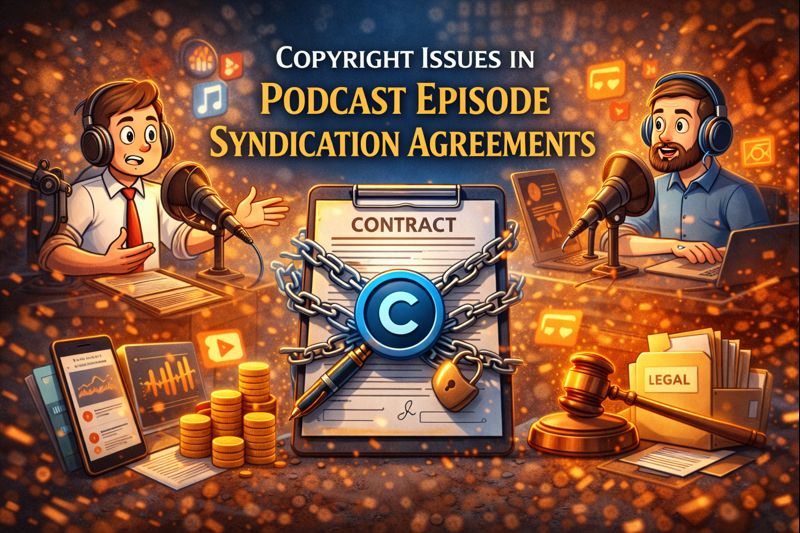
The first question that needs to be addressed here is what refers to copyright issues in the context of podcasting. It involves the use of audio, sound effects, spoken content, video, images, logos, or any kind of intellectual property that doesn't have the due permission of its explicit usage given by the original creator of the podcast. This leads to legal troubles for the creator of the podcast, and therefore it becomes necessary to ensure that the original rights of the work are duly protected. The various strategies that can be used by the podcaster to avoid legal complications are as follows:
1. Understanding The Basics Of Copyright
Copyright is a type of intellectual property that protects the original creator's work from getting copied and grants exclusive rights for its use and distribution. Therefore, any artistic work like songs or videos can't be used in the podcast episodes without permission, or else it will lead to copyright infringement.
2. Creating Original Content
It is one of the best ways to avoid legal complications. The creator of the podcast can create his own original piece of music, video, or any other form of intellectual property. This will make him enjoy the exclusive rights of the artistic work.
3. Obtaining Permission from the original creator
It is important to seek permission from the copyright holder before using his work. This allows the podcaster to avoid legal complications. It involves licensing agreements or written consent, which ensures you have the legal right to the same.
4. Drafting clear agreements
These contract agreements help the guests, co-hosts, and freelance contributors from suffering from any kind of legal trouble in the future. These agreements should be drafted with precision and clarity, which clearly cites the terms and conditions.
Additionally, the syndication agreements that take place between the creator of the podcast and the various distributors need legal protection to avoid copyright infringement. Syndication agreements are contracts that allow any piece of artistic work to be distributed and broadcast across multiple streaming channels, which results in increased revenue for the producers. The creator has exclusive rights to reproduce, distribute, perform, and display the podcast.
Now, if a podcast requires multiple contributors, it becomes important to clarify ownership and copyright through agreements. There are various issues that arise due to ambiguous agreements. These may include the licensee using the content in ways not specified in the agreements, such as distributing it on unauthorized platforms, sublicensing without permission, or creating unauthorized derivative works. Another issue arises when syndicators fail to provide proper credit to the original author or publisher, which leads to issues with regard to content ownership and loss of brand recognition. Even with a legitimate syndication agreement, the content can be vulnerable to piracy once it is distributed more widely. The agreement must outline a clear process for handling takedown notices and enforcement to protect the content from illegal use on third-party sites.
When content is syndicated across different countries, complexities arise due to variations in international copyright laws and regulatory landscapes. Agreements need strong, specific clauses that align with the regulations of each relevant jurisdiction. To avoid these issues, syndication agreements should be drafted with utmost clarity. The agreement should explicitly state the scope of rights granted, duration, and permitted media formats. Another step that can be taken in furtherance can be to ensure the content explicitly states they retain copyright ownership. The agreement should mandate proper attribution, including the creator's name and links to the original source. Broadcasters and platforms often seek indemnities from right holders against claims of infringement, which helps allocate risk and protect parties from legal exposure. The original creator should regularly audit the syndication platforms to ensure adherence to the terms of agreement and address any unauthorized use of it.
In addition to this, one should educate himself on any specific permissions or licenses required for syndicating content on various platforms. Being well informed about copyright regulations enables the creator to make informed decisions and protect their content effectively. Adding watermarks or visual identifiers helps in protecting the work, and the use of copyright symbols on visuals prevents any kind of unauthorized use of the original work. All of these strategies should be employed to protect a creator's work from getting exploited by the various syndication platforms.
CONCLUSION
To conclude the article, we can say that copyright issues have become quite prevalent with the growing trend of podcasts, and therefore it becomes necessary to look at various copyright infringements that can take place if the work is not duly protected and authentic permission has not been obtained from the original creator. It is important for the creator to take various steps to mitigate these issues. Further, syndication agreements should also be authorized and should be dealt with with utmost precision and clarity, avoiding legal complications. There are various issues that arise due to ambiguous agreements, and thus various necessary strategies should be employed while the work is being distributed to various platforms to retain the original rights.