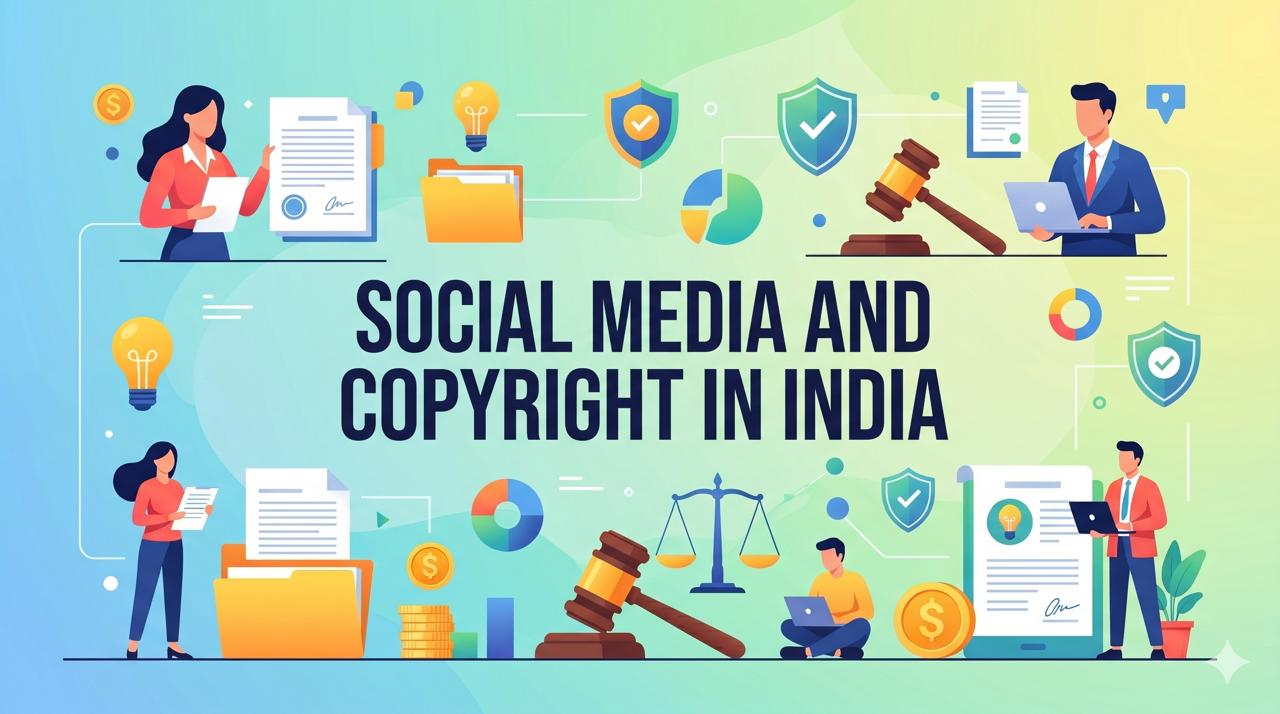
Social Media And Copyright In India
User-generated content often runs into legal trouble under India's Copyright Act of 1957. The law is clear that creators own what they make — yet a surprising number of people in the industry assume that once something is posted online, it's fair game for anyone to use. That assumption is legally wrong.
IPR
Lamiya
4/24/20263 min read
INTRODUCTION:
Despite appearances, public posts tagged with a brand name do not automatically grant usage rights. Today’s digital marketplace treats user-created material as key proof of genuine engagement. There exists confusion where advertising practices meet actual law. Some companies believe visibility implies permission. Legal ownership, though, remains separate from online exposure. The law does not allow for shortcuts that use someone else's work, even if only for a short time. When companies use material without permission, courts see this as a violation, not a chance to take advantage. The damage caused by what some might call harmless borrowing is often permanent. Courts require that permission be granted beforehand; fixing the problem later is not enough. Payment may follow exposure, yet it never erases the initial fault. Legal gaps close fast when profit enters the picture. Today's ease often becomes tomorrow's responsibility.
Laws in India.
Under Indian copyright law, protection kicks in automatically — no paperwork needed. The moment a creator shoots a video or takes a photo, that content is legally protected under Section 13 of the Copyright Act, which covers original digital works from the instant they're created.
The creator is the default owner. Section 17 of the Act is straightforward on this: whoever made the content owns it, full stop. And if someone infringes on that ownership, the creator doesn't need a formal registration certificate to take legal action — a 2021 Supreme Court ruling in Sanjay Soya Pvt. Ltd. v. Narayani Trading Company confirmed that registration is helpful but not a prerequisite for filing a case.
One thing brands often get wrong is the hashtag question. Just because a user posts with your branded hashtag doesn't mean they've handed over their content. Hashtags are simply discovery tools — they help people find posts, nothing more. They are not a licensing agreement, and they certainly don't give a brand the right to download someone's content and republish it on an e-commerce listing or website without the creator's explicit permission.
The "Deletion is Not a Cure" Doctrine
A core area of legal contention is post-usage liability. When a brand uses a creator’s work to sell products, especially on high-conversion platforms like Amazon or official web stores, they are engaged in commercial exploitation.
1. Infringement and Account of Profits
Unauthorised use for any duration grants a brand an unfair commercial advantage. Under Section 55, the copyright owner is entitled to:
• Compensatory Damages: The fair market value of the license that should have been purchased.
• Account of Profits: A portion of sales revenue attributable to the infringing content during its period of activity.
2. The Failure of the De Minimis Defence
The Delhi High Court in India TV Independent News Service v. Yash Raj Films (2013) established that while small, incidental uses might be excused in non-commercial contexts, they are rarely excused in commercial advertisements. If the content was used to drive sales, the court generally rejects the idea that the infringement was "trivial."
Moral Rights
Even if a brand compensates a creator later, they may still violate Section 57: Author’s Special Rights. These are inalienable and stay with the creator regardless of economic licensing.
• Right of Integrity: Creators can claim damages if their work is modified in a way that is "prejudicial to their honour."
• Right of Attribution: Brands must correctly identify the creator. Removing a watermark or failing to provide credit violates the principles established in Amarnath Sehgal v. Union of India (2005).
CONCLUSION
India's copyright law is straightforward: creators own what they make, and no hashtag or brand mention changes that. Brands that use someone's content without asking risk fines, lost profits, and legal claims that don't go away just because the post was deleted. Courts in India have made it clear that commercial use is taken seriously, no matter how brief. The fix is easy: ask for permission before using anyone's content. In today's world, where creators drive real business value, respecting their work isn't just a legal obligation; it's simply the right thing to do.