
Third Party Contracts
At its simplest level, a contract is a private agreement between two or more people. In the legal world, this is often called privity of contract. This rule generally means that only the people who signed the paper (the parties) have rights or duties under that deal. If you and your neighbour agree that you will paint their fence for $100, a person living three streets away cannot suddenly show up and demand you paint their fence too. They are not part of the deal.
CORPORATE LAWS
Shree
4/25/20264 min read
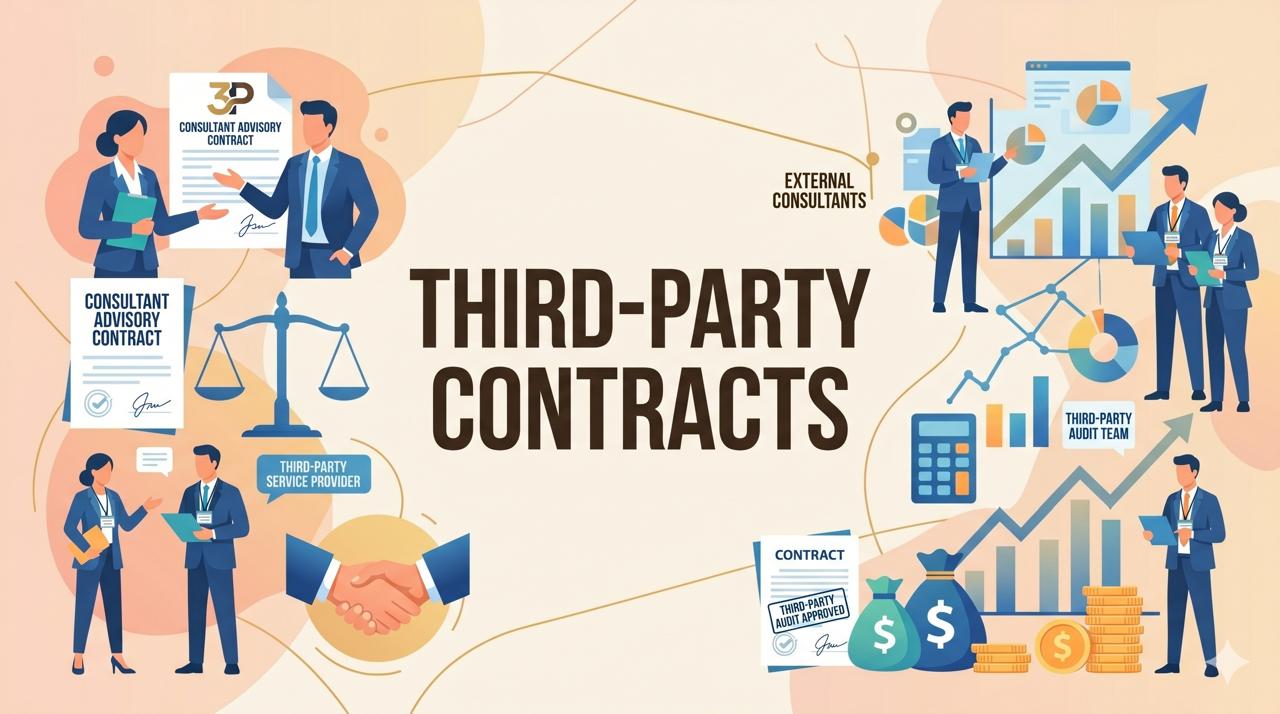
INTRODUCTION
At its simplest level, a contract is a private agreement between two or more people. In the legal world, this is often called privity of contract. This rule generally means that only the people who signed the paper (the parties) have rights or duties under that deal. If you and your neighbour agree that you will paint their fence for $100, a person living three streets away cannot suddenly show up and demand you paint their fence too. They are not part of the deal.However, life and business are rarely that simple. Sometimes, a contract between two people ends up affecting a third person who never signed anything. The big question is: can that third party be forced to follow the rules of a contract they did not sign? Or, on the flip side, can they sue to get the benefits of that contract?
While the starting answer is usually "no," there are several important exceptions where a contract can reach out and touch someone who was not an original signer.
1. When the Third Party is a Beneficiary
The most common way a third party gets involved is when the contract was specifically made to help them. This is known as an intended beneficiary.
Imagine a parent signing a contract with a private tutor to teach their child. The child doesn't sign the contract, but the whole point of the deal is to benefit the child. In many modern legal systems, if the tutor fails to show up, the child (the third party) might actually have the right to hold the tutor accountable, even though the child's signature isn't on the document.
For this to work, it must be clear that the original signers meant for the third party to have these rights. If the benefit to the third party is just a lucky accident, they usually can't enforce anything.
2. Acting on another person’s behalf
When a person signs a contract for someone else, it is known as an agency relationship. It is done in the representation of the other person.
For example, a real estate agent signs some papers; they act for the homeowner. Although the homeowner may not be present at the time of signing, they still become bound due to the fact that the agent has the authority to act in their representation.
In the eyes of the law, the "agent" is just a tool used by the "principal" (the person in charge). Therefore, the contract is enforced against the principal as if they had signed it themselves.
3. Passing on Rights and Duties (Assignment and Delegation)
Contracts can sometimes be traded like property.
Assignment: This is when you pass your rights to someone else. If a company owes you $500, you can "assign" that right to a friend. Now, the company has to pay your friend, even though your friend wasn't part of the original deal.
Delegation: passing your duties to someone else. If you are hired to mow a lawn, you might hire a subcontractor to do it for you.
However, there is a catch: you usually cannot delegate a duty to a third party if the task requires a specific personal skill (like painting a portrait) or if the contract specifically says "no substitutions." Also, just because you pass the work to someone else doesn't always mean you are off the hook if they do a bad job.
4. Business Successors and Mergers
In the corporate world, companies change hands all the time. If Company A signs a contract with a supplier and then Company B buys Company A, Company B usually "steps into the shoes" of the old company.
The supplier can enforce the contract against Company B even though Company B's name wasn't on the original paper. This is because, legally, the new company has taken over all the responsibilities and assets of the old one. Without this rule, companies could just change their names or merge to avoid paying their debts.
5. Covenants That "Run with the Land"
This is a specific rule often found in real estate. Sometimes, a contract is tied to a piece of property rather than a person. These are often called covenants.
If you buy a house in a neighbourhood that has a rule saying "no fences higher than four feet," you are bound by that rule. It doesn't matter that you didn't sign the original agreement made by the developer thirty years ago. Because the rule is attached to the land itself, anyone who buys the land is automatically part of the contract.
6. Apparent Authority
When a party acts as if they are part of the contract, or lets other people believe that they are part of it. If a person lets another person sign on his behalf and does not stop this action, the Court can hold that the first person is estopped from denying the binding nature of the contract. If a person is led to believe that the person’s participation in the contract, and this other party relies on this fact and acts to their detriment, the law will estop the first party from going back on this position.
7. Tortious Interference
This is one of how a third party entangle themselves into litigative trouble. If the third party is aware of the contract between the two parties and tries to break it on purpose to gain from it. This can lead to them being sued.
Even though the third party has not signed the contract, they have a duty to respect the relationship created by the contract. This stops third parties from interfering with other people’s deals.
Conclusion
The cardinal rule is- If you haven’t signed it, you cannot be part of it. It protects people from being obliged to perform duties without their consent. It is the reason why people feel secure doing business with other people. The obligations and the liabilities are not variable and are fixed.
However, as we have seen, there are many "back doors" where a third party can become involved. Whether it's through a representative, a business takeover, or buying a specific piece of land, the law looks for ways to ensure that fairness and common sense prevail.
If you find yourself in a situation where a contract you didn't sign is being pushed on you, or if you want to benefit from a deal someone else made, the key is looking at the intent of the original signers and the nature of the relationship. The law doesn't just look at the signatures; it looks at the reality of the deal.