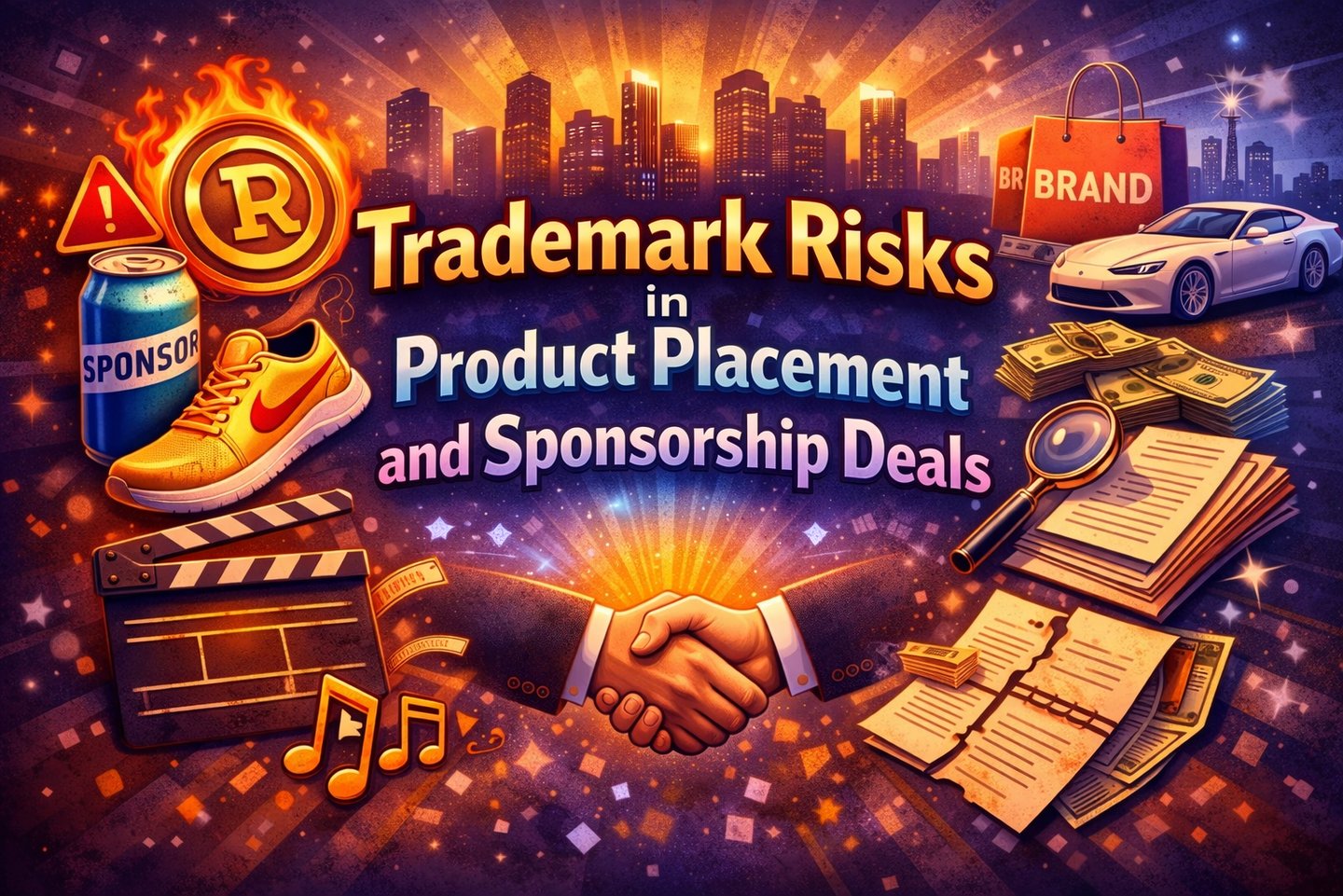
What are the trademark Risks in Product Placement and Sponsorship Deals?
In today’s blended marketing world, product placement and sponsorship deals provide brands with significant visibility but also expose them to real risks of trademark infringement, dilution, and false endorsement. This article explains the main legal menaces and practical ways to protect yourself under Indian and global rules.
IPR
Apoorv
2/25/20263 min read
Introduction
Brands are constantly searching for ways to appear naturally in films, web series, sports, and cultural events. A luxury watch on a hero’s wrist or a soft-drink logo all over a stadium can create instant recognition and a strong emotional bond with the audience. Yet these strategies—product placement in movies and web shows, backing of sports or artistic events—carry trademark troubles. Without proper safeguards, what begins as clever marketing can spiral into costly action, reputational damage, or loss of brand distinctiveness. Whether you operate in mature markets, trademark law requires careful planning to gain an advantage without inviting trouble.
Product Placement
Product placement, or “brand integration,” unlike traditional advertising, feels organic. It involves featuring a branded product within media content for payment or promotional support. A character sipping a particular cola or driving a specific car creates a brand that sinks into the viewer’s mind without them noticing.
In India, product placement has flourished with the rise of OTT platforms and web series. Brands appear naturally in stories, but legal oversight remains light. The Trademarks Act 1999 steps in when a registered mark is infringed.
Section 29(1) states that the trademark is infringed if someone uses a mark that is the same or very similar and can confuse people into thinking it is your brand. Section 29(4) states that a registered trademark is also infringed if the goods/services are completely different, if the trademark is well-known/has a strong reputation in India, or if another person uses a similar mark without any good reason or takes unfair advantage of the brand’s fame, or harms the brand’s reputation or distinctiveness.
The incidental use of a product in the background rarely triggers liability, but paid, prominent placement that implies approval can bring claims. Producers must avoid negative descriptions that damage goodwill. Defaming a brand on screen or associating it with unethical behavior can support tarnishment claims.
Trademark Threats in Sponsorship Agreements
Basically, sponsorship means a brand pays to be the "official partner" for an event, team, or person. You'll be granted the right to use the event's name, logos, and pictures. Things can get heated up over the sponsorship contract. Key risks include:
● False Association and Passing Off: A non-sponsor using event-related terms (“World Cup Sale”) may suggest cooperation. Indian courts have examined similar “ambush marketing.” In the 2003 Cricket World Cup dispute, the case underlined how indirect references can erode official sponsors’ exclusivity.
● Dilution of Distinctiveness: Repeated association with mismatched events or controversial figures can blur a mark’s image. Under Indian law, well-known marks receive protection across different classes against unfair advantage or harm.
● Reputational Contagion: Sponsors inherit the sponsored party’s dishonors. A celebrity endorser involved in allegations or a controversial event can blemish the brand overnight. Termination clauses become essential.
● Intellectual Property Ownership Gaps: Who owns jointly created content, social media posts, or highlight reels? Without clear licensing and brand guidelines, sponsors risk that unrestricted use will dilute quality perception.
● Influencer and Paid Partnership Risks: When influencers promote products, both sides can be held liable. Misleading use or failure to disclose can result not only in trademark infringement but also in consumer protection claims.
Navigating the Risks: Best Practices
Brands treat trademark clearance as non-negotiable. Before any placement or sponsorship:
● Conduct Thorough Clearance Search: Corroborate that the proposed use doesn’t conflict with existing registrations, especially for well-known marks.
● Draft Secure Contracts: To precisely define the scope of trademark licensing, it's crucial to include comprehensive brand guidelines that authorize the consent of all creative materials. Furthermore, robust indemnification clauses should be incorporated to shift liability for infringement. Negotiating wide termination rights is also important. This allows for exit in cases of reputational harm, major regulatory changes, or a breach of contract. Lastly, the agreement must clearly state the ownership of any secondary content created and outline detailed obligations after termination.
● Give Explicit Permissions: Never assume that incidental use is safe. Obtain written consent from trademark owners for background props.
● Disclose Paid Placements: Transparency builds trust and reduces hoax claims. For influencers, mentioning hashtags like #Ad or #Sponsored is essential.
● Surveillance: After a deal, surveillance prevents unauthorized extensions of use. Quick check-and-desist letters or injunctions protect rights.
● Consider Insurance: Media liability and intellectual property insurance can cover litigation costs.
In India, registering marks as "well-known" with the Trade Marks Registry boosts protection across classes and regions.
Conclusion
Sponsorship deals and product placement are still effective ways to grow brands, but they are at the intersection of law, business, and creativity. Years of goodwill can be undone, and disputes can arise from a single error, such as unapproved use, poorly drafted contracts, or failing to anticipate reputational harm. Brands can use these marketing channels with confidence if they see trademarks as valuable assets rather than as trivial details. Without the right focus, the message can quickly become hazy, which is dangerous. In a world full of brands, businesses can transform possible risks into advantageous, protected partnerships that furnish long-term value with careful planning, solid agreements, and constant compliance.