
What Happens if Two Businesses Start Using Similar Logos at the Same Time?
Trademark law defends brand names and avoids confusion to the consumer. When two companies use similar logos at the same time, there would be legal claims on ownership, priority of use, consumer confusion, and trademark rights.
CORPORATE LAWS
Shruti
3/10/20264 min read
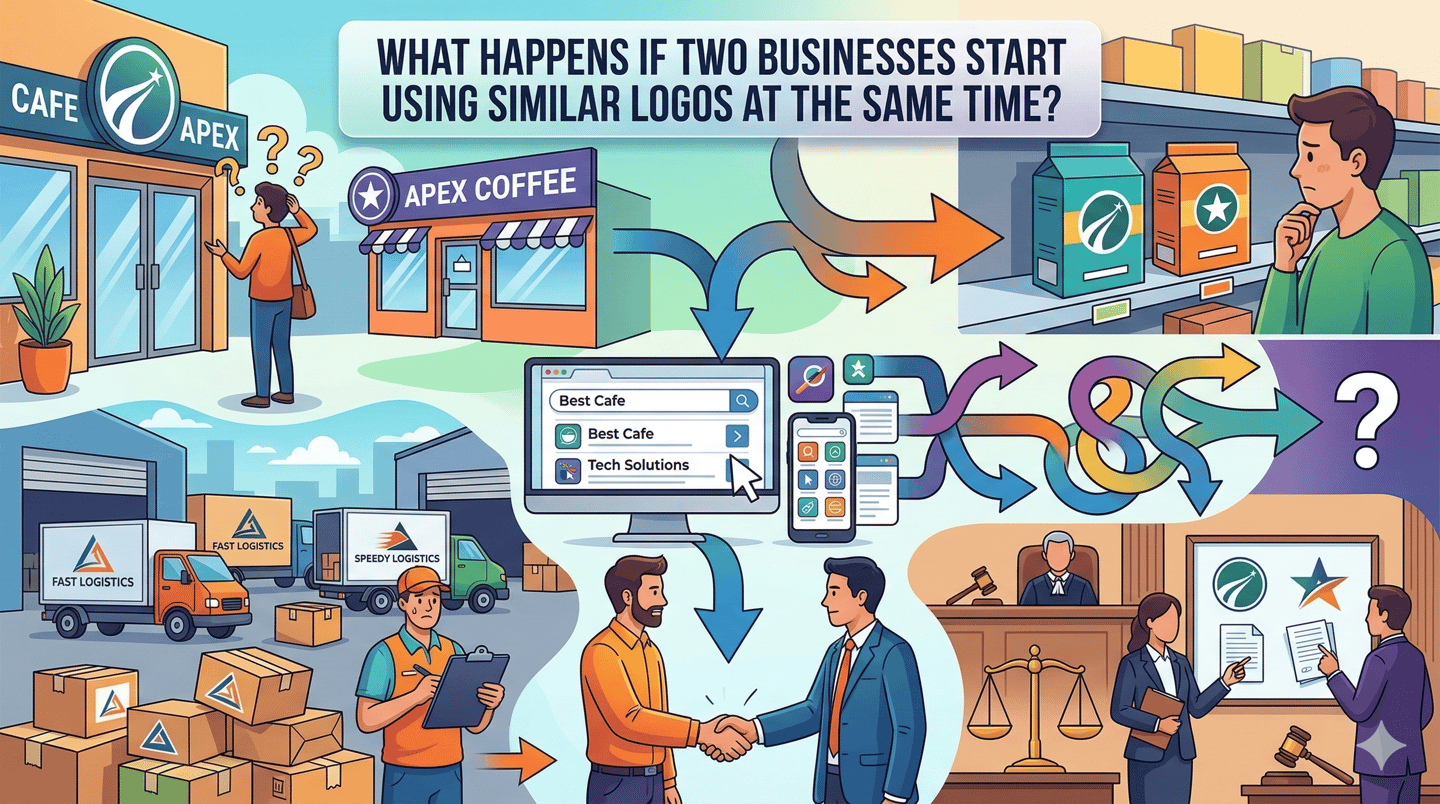
Introduction
Logos are instrumental in contemporary business because they shape a business's identity, reputation, and goodwill. A logo assists the consumer to know the origin of goods or services and the difference between two different businesses. Due to its significance, companies want legal safeguarding of their logos under the trademark law. The problem, however, comes in when two businesses start using similar or even the same logo around the same time.
This raises the question of who is the rightful owner of the logo and what the law does when there is a conflict between two rival businesses. The objective of trademark law is to avoid confusion among consumers and, at the same time, to ensure fair competition among businesses. When two users employ similar logos at the same time, courts must consider factors such as priority of use, geographic markets, likelihood of confusion, and status of registration.
This paper examines the use of trademark law in cases where two companies use the same logo simultaneously, the underlying principles of law, and the consequences of such cases.
Principle of Priority of Use
The principle of priority of use can be considered one of the most significant in cases of trademark disputes. According to this rule, an individual who initiates the use of a trademark in business is usually superior to other subsequent users.
Though two companies may argue that they began using similar logos simultaneously, a court tries to establish which one is able to prove the earlier or more significant use. The date of the first use can be determined by the evidence, like invoices, adverts, packages, or business records.
In the case when one of the parties can prove that it started applying the logo a little bit earlier, the court can provide it with the exclusive rights to the trademark. In order to avoid confusion in the market, the other business might be forced to change or abandon the use of the logo.
Consumer Confusion Probability.
The probability of consumer confusion is also another critical experience in trademark battles. The core essence of trademark law is to prevent customers from being misled about the source of goods or services.
Where a similarity exists between the logos of two businesses, the courts examine the possibility of an average consumer confusing the products or services to be of the same origin. In this analysis, there are various factors put into consideration. These factors include:
1. Association between the two logos.
2. Characteristics of the nature of goods or services provided by the businesses.
3. Target markets and market channels.
4. Consumers' exercise of the degree of care.
5. General impression created with the help of logos.
When the logos are very similar and in the same industry, there is a high chance they will be confused. In this situation, a court can bar one or both businesses from using the logo.
Concurrent Adoption and Concurrent Honest Use.
There are cases where two companies come up with the same logos independently, with no intention to imitate the other. This case is referred to as honest concurrent use.
Under these circumstances, courts or trademark authorities can grant the right to use the logo to both businesses, provided certain criteria are met. Such conditions tend to include:
The businesses borrowed the logo and borrowed it in a manner that was not deceitful.
• The two parties have been using the mark for a long period.
• The risk of being confused is not too great.
The businesses have varying geographical locations or industries.
It states in Section 12 of the Trade Marks Act, 1999, that “In the case of honest concurrent use or of other special circumstances which, in the opinion of the Registrar, make it proper so to do, he may permit the registration by more than one proprietor of the trade marks which are identical or similar (whether any such trade mark is already registered or not) in respect of the same or similar goods or services, subject to such conditions and limitations, if any, as the Registrar may think fit to impose." Thus, the Registrar can allow registration of similar or the same trademarks in instances of innocent coincidental use. This is, however, a calculated move so that the interests of the consumers are not hurt.
Geographic Market Factors.
Another significant role in the conflict resolution of similar logos is played by the geographical factors. When two companies have completely different locations and their markets do not overlap, the courts can permit both companies to use their logos.
As an example, when one company has operations confined to northern India and another to southern India, the chance of confusion among consumers can be minimal. Under these circumstances, there can be the coexistence of both businesses with some limitations.
But nowadays, in the digital era,companies tend to work online and attract clients in different territories. This growth makes geographic distance less relevant and makes trademark clashes more likely.
Conflicts over Registration of Trademarks.
There is also another problem that occurs when both companies submit their applications to use their logos as trademarks at the same time. When this happens, the trademark office reviews the applications and makes a decision on whether the marks are the same or deceptively similar. In case the authority determines that the logos are too close and may create confusion, then one or both applications may be rejected. Registration may be granted to the applicant with the more distinctive mark or to the applicant who can show prior use. In some cases, the dispute can end up in opposition proceedings, where one side argues against the other's mark before the trademark registry.
Conclusion
In cases where two businesses start using the same logos simultaneously, the trademark law comes in handy to determine a solution to the conflict. The factors applied by courts and trademark authorities include the priority of use, chances of confusion by consumers, fair usage in good faith, and geographic market. The end goal of the trademark law is to safeguard the consumers as well as the businesses by establishing that trademarks are consistent sources of origin. Although similar logos can be implemented simultaneously without intent, the legal system has mechanisms for establishing ownership and preventing unfair competition. One way businesses can minimise the risk of such disputes is by conducting extensive trademark searches prior to adopting a logo and securing timely trademark registration. Legal precautions are appropriate legal tools that help maintain brand identity and foster an open, honest marketplace.