
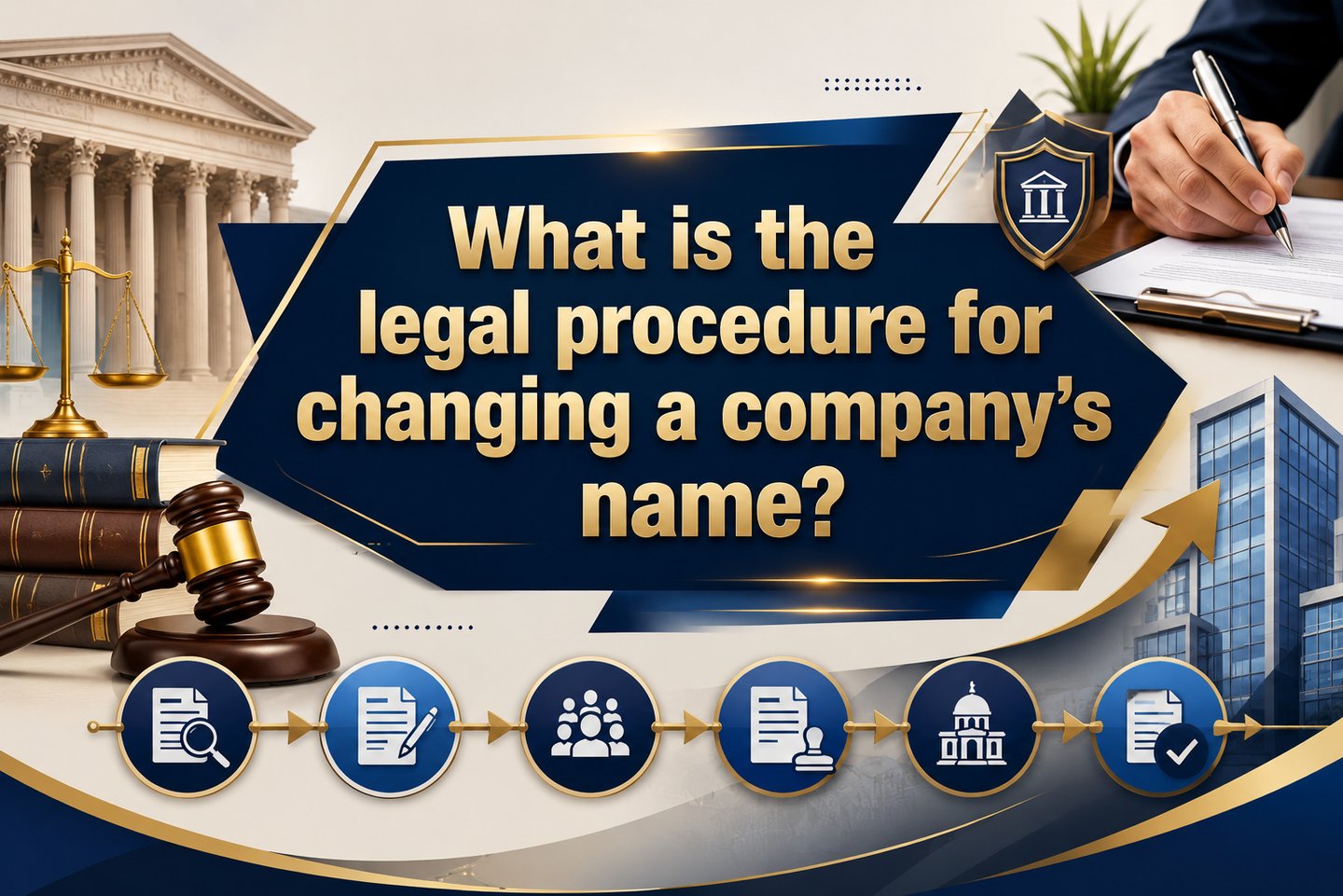
WHAT IS THE LEGAL PROCEDURE FOR CHANGING COMPANY'S NAME ?
Companies can legally change their name due to branding, expansion, mergers or legal issues. The process involves approvals, regulatory filings and compliance with corporate laws and registration process.
CORPORATE LAWS
MANSI
6/4/20264 min read
Introduction
A company’s name is an important aspect of its identity and reputation. It enables customers to identify the business and develop trust in the marketplace. However, companies can change their names for a variety of reasons including changing business goals, market competition, mergers or legal requirements. The name change offers the chance to present a new image while continuing the same business operations.
The Companies Act, 2013 permits companies in India to change their registered names by following the essential legal procedure. The procedure guarantees transparency and safeguards shareholders, creditors and the public from confusion.
Meaning of Company Name Change
A company name change refers to the legal alteration of the registered name under which a company operates. Once approved, the new name becomes the official identity of the company for all legal and commercial purposes.
The legal status of the company remains unchanged despite the name change. Its assets, liabilities, contracts, and legal proceedings continue without interruption. Only the name recorded in official documents is modified.
For example, several well-known companies across the world have changed their names to reflect modernization, diversification, or new business strategies. Such changes help companies stay competitive and relevant in evolving markets.
Reasons for Changing a Company Name
There are several reasons why companies may choose to change their names.
1. Rebranding and Market Positionin
Companies often change their names to create a stronger and more modern brand image. Rebranding helps businesses attract customers and improve recognition in competitive markets.
2. Expansion of Business Activities
A company may expand into new industries or services that are not represented by its existing name. A new name can better reflect broader business operations and future goals.
3. Merger or Acquisition
When two companies merge or one company acquires another, they may adopt a common name to establish a unified corporate identity.
4. Legal or Trademark Disputes
A company may be required to change its name if it resembles an existing registered trademark or violates legal naming guidelines.
5. Change in Ownership or Management
New owners or management teams may prefer a different company name aligned with their business vision and strategy.
Legal Process for Changing a Company Name
The law prescribes a systematic process for changing a company’s name. Every step must be properly followed to ensure validity and compliance.
1. Conducting a Board Meeting
The process begins with a board meeting where the directors discuss and approve the proposed name change. A board resolution is passed authorizing the company to proceed with the required legal formalities. The directors also decide the proposed names that will be submitted for approval.
2. Application for Name Approval
The company must apply to the Registrar of Companies through the MCA portal for approval of the proposed new name. In India, this is generally done through the RUN (Reserve Unique Name) service. The proposed name must:
Be unique,
Not resemble an existing company name,
Not violate trademark laws,
Comply with legal naming rules.
If the name satisfies the required conditions, the ROC grants approval and reserves the name for a limited period.
3. Shareholders’ Approval Through Special Resolution
After obtaining name approval, the company must conduct a general meeting of shareholders. A special resolution is passed approving the amendment of the name clause in the Memorandum of Association (MOA). Generally, at least 75% of the shareholders voting in the meeting must support the resolution.
4. Filing Necessary Documents with ROC
The company is required to file prescribed forms and supporting documents with the ROC within the specified time limit. These documents include:
Certified copy of the special resolution,
Altered MOA and Articles of Association (AOA),
Board resolution,
Government filing forms and fees.
The ROC carefully examines the documents before granting final approval.
5. Issuance of Fresh Certificate of Incorporation
Once the ROC is satisfied with the compliance requirements, it issues a fresh Certificate of Incorporation containing the new company name. The name change becomes legally effective from the date mentioned in the certificate. Only after receiving this certificate can the company officially use the new name in business activities and legal documents.
Post-Approval Compliance Requirements
After the approval of the new name, the company must update the changed name in all official and commercial records. These include:
Bank accounts,
PAN and tax registrations,
GST certificates,
Licenses and permits,
Employment records,
Company website and letterheads,
Contracts and invoices.
The company should also notify customers, suppliers, creditors, and government authorities to avoid confusion in future transactions.
Legal Effect of Company Name Change
Changing a company’s name does not affect its legal identity or continuity. The company continues to exist with the same assets, liabilities, rights, and obligations.Existing contracts, legal proceedings, and debts remain valid despite the name change.
Therefore, a company name change is only a modification of corporate identity and not the formation of a new entity.
Challenges Faced During the Process
Although the process is legally structured, companies may face practical difficulties such as:
Rejection of proposed names,
Trademark objections,
Delays in approvals,
Rebranding expenses,
Updating official records and marketing materials.
Proper planning and legal guidance can help companies complete the process efficiently and avoid unnecessary delays.
Conclusion
Yes, a company can legally change its name by following the procedure prescribed under corporate law. The process involves board approval, shareholder consent, name reservation, filing of legal documents, and issuance of a fresh Certificate of Incorporation by the Registrar of Companies. Although the company adopts a new identity, its legal existence, liabilities, and obligations remain unaffected. A properly managed name change can improve branding, support expansion, and strengthen market presence. Therefore, companies must carefully follow all legal requirements and complete post-approval formalities to ensure a smooth and successful transition.