
WHAT LEGAL REMEDIES EXIST WHEN ONE SPOUSE CONCEALS ASSETS DURING DIVORCE PROCEEDINGS
The article involves the discussion of various remedies available when one of the spouses conceals assets or income during divorce proceedings
FAMILY LAW
Sania
3/24/20264 min read

INTRODUCTION
Divorce involves a financial audit as well. There’s a saying among family law practitioners. When a divorce petition is filed, the husband’s thriving business starts to struggle. Profits disappear, employees’ salaries are reduced to the legal minimum, and luxury vehicles are sold to vague “third-party” dealerships. This phenomenon is referred to as Poor Spouse Syndrome. It’s a legal strategy to generate and document financial difficulties to limit the former spouse’s entitlement to spousal support. It’s a terrible strategy, but it is effective. If you claim to be financially destitute, the court will not order you to pay anything. For decades, this tactic worked disturbingly well. Courts often struggled, having to rely on guesses to assess a spouse’s actual income. Judges would see a man claim poverty and an expensive watch and only sigh, having no capacity to resolve the disparity between his income and lifestyle. The year 2026, however, is different. The new Bharatiya Nagarik Suraksha Sanhita (BNSS) and some important judicial precedents have thoroughly regulated the legal practices of the preceding Bharatiya Sanhita. No more hiding assets, especially in a divorce. Courts do not obtain assets, and hiding them will be considered an obvious and reckless strategy with the potential to lose a civil case and possibly incur criminal liability.
THE LEGAL CHANGES BROUGHT BY THE COURT
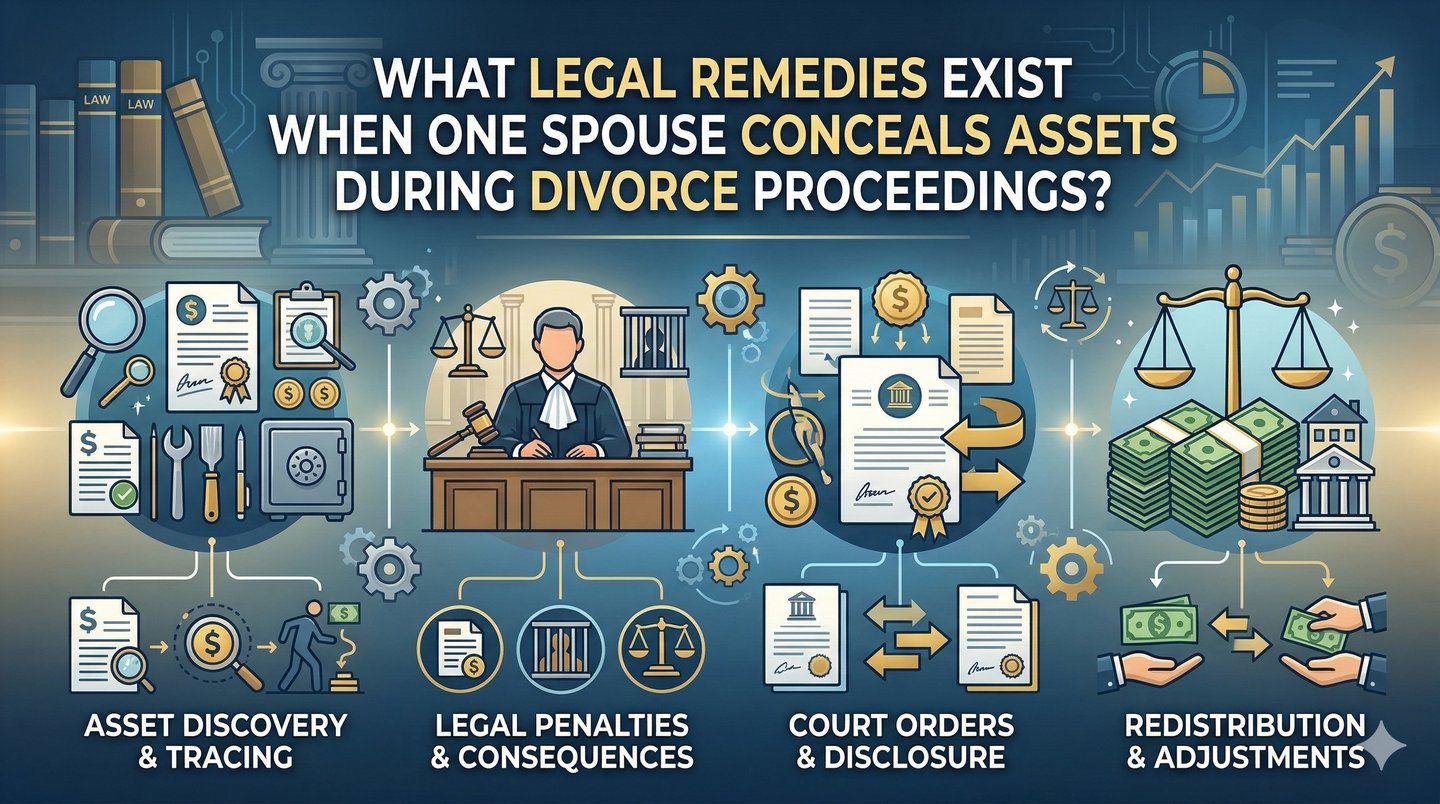
There was a legal change because of the Supreme Court case Rajnesh v. Neha. Before the case, who got maintenance depended on who was the better screamer or the better stuffer. The Supreme Court saw that the screaming and stuffing was a deliberate attempt to thwart justice and that this should be of great concern. In response, the Supreme Court put in place a requirement to file an Affidavit of Disclosure of Assets and Liabilities. This form is not simply regularly filed; it is a sworn form and, therefore, a form of litigation accountability. Each party is required to provide an account of every single one of their assets, including all bank accounts and mutual funds, as well as all of their expenses, including subscriptions to Netflix and gyms and all foreign travel. The positive side to Rajnesh's affidavit is that it observes dishonest litigants before any kind of trial. An affidavit requires a litigant to stick to one financial story. For instance, if a husband states he is unemployed and broke, and he is showing litigation documents that prove otherwise (ex. credit card statements of ~ ₹50,000 a month), he has lied. This means it is even further from the ultimate truth. The affidavit takes away the excuses people might have to hide the truth. For example, a spouse simply says, "I forgot to mention my other bank account and the money in it. " The law now takes it as an assumption that, out of the missing information, one of the parties is dishonest. The spouse who is the litigant: what happens if they are consistent with their dishonesty? This is the needed strength of the law’s procedure, here specifically, Order XI of the Code of Civil Procedure (CPC). This particular order deals with what are called "interrogatories," which are an underutilised feature of marriage law. Instead of vague claims of any kind of fraudulent activity, a smart litigant can use interrogatories to pose specific, bound questions that the other side needs to respond to under oath. A litigant may conceal documents, but it is much more difficult to conceal one’s way of living, which is what has led to "imputed income." Judges are practical in the year 2026.
THE CONSEQUENCES OF FALSE CLAIMS
Tax returns and balance sheets can be changed, but it is hard to pretend to be wealthier than you are. If a person files for bankruptcy and goes to court in a luxury SUV, wears expensive watches, and is a member of an exclusive country club, the judge is going to ignore everybody's income claims. The judge will make a guess on how much he likely makes to support that lifestyle and will set up his maintenance payments on that amount. It is like the court is saying, “If you aren’t going to be truthful, we are going to assume the worst.” With the new Bharatiya Nagarik Suraksha Sanhita (BNSS), the punishment for perjury will be a lot more severe than it has been in the past. People in the past saw divorce cases as private matters and did not want to get the police involved. Now, it is very common to see the police involved when someone has lied and provided a false affidavit. It is expected. The police will make it very clear that lying will result in imprisonment. This expectation will often persuade stubborn litigants to settle.The risks are much greater with this case and are likely to move to a criminal matter, which not many people want to take. Also, we cannot forget the role of technology in the modern courtroom. While a cash-based economy can be successfully avoided, there are some digital records that make this impossible. This includes the Annual Information Statement (AIS). The Tax Department has access to and can monitor transactions pertaining to a person’s PAN card, whether they be for stocks, real estate, cash, or credit card transactions over a certain threshold. This will become public, and there won’t be an adequate explanation to defend against this digital evidence that the government has. A spouse cannot say the government is wrong when they buy TATA Motors shares and claim to be broke. The government’s digital record is permanent and will be the authoritative evidence in the case.
CONCLUSION
You cannot ‘starve out’ a spouse anymore by hiding money. The legal system is very transparent due to the mandatory requirements from Rajnesh v. Neha, the CPC’s ability to investigate, and the criminal aspects of the BNSS.