
WHAT MAKES FREEHOLD AND LEASEHOLD PROPERTY DIFFERENT?
There are two types of property under Indian law: freehold and leasehold, and they have a wide range of distinctions in duration, transferability, rights granted to the owner or lessee, etc. Freehold is absolute and perpetual, and there is no further duty or obligation on the part of the grantee to the superior landlord; Leasehold is a right to use and occupy real estate that is restricted to a specific period of time and is subject to the conditions of the lessor. This article explores the legal framework of both forms under the Transfer of Property Act, 1882, underscores the utility for the buyer and the investor and presents the judicial safeguards afforded to leaseholders in India.
CORPORATE LAWS
Vaishnavi Upadhyay
5/7/20264 min read
Introduction
Not all of the property is uniformly owned by India. The rights you have to land or a building will rely upon substantially on how they're acquired and the conditions of the land or building's acquisition. One of the most basic differences between the various types of estate interests in property in India lies between a freehold estate and a leasehold estate, which determines different aspects of rights of ownership, duration of rights of ownership and transferability of the property, development and mortgage.
What does Freehold Property mean?
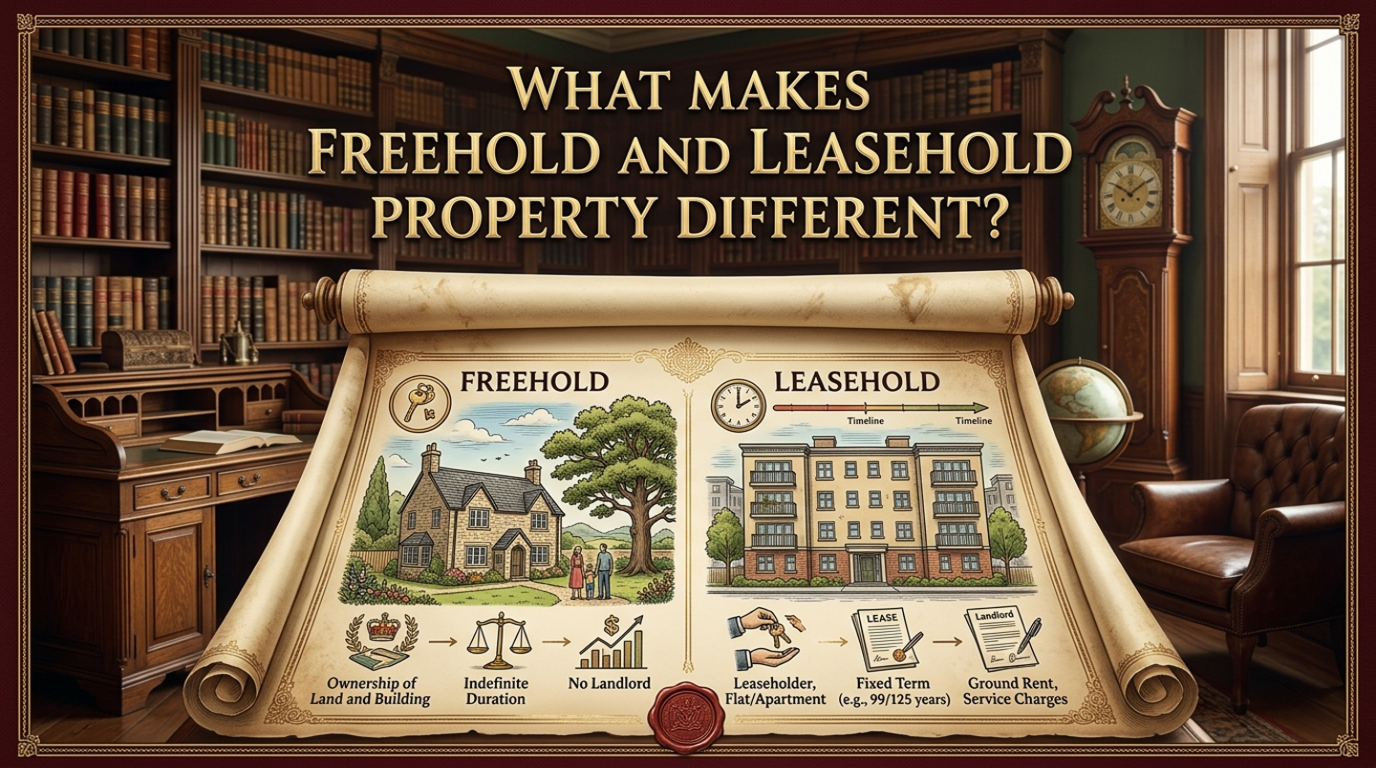
Land or property that is owned for ever and without any rights of ownership of others is called freehold property. The term means there are no conditions attached to the land, the owner has no current responsibilities to any superior master of the land or grantor. Freehold in Indian law means the same as absolute ownership, the right to possess, use, enjoy, transfer and dispose of property without first asking anyone else's permission.
The word “freehold” is not expressly used in the Transfer of Property Act, 1882, but appears in the provisions of the act on sale, gift, and absolute transfer. A freehold owner can mortgage, divide, rent out or leave the land as a gift at will. If it dies, it will be distributed to the legal inheritors according to the inheritance laws in place. The Delhi Development Authority and the Noida Authority have been running schemes in Delhi for a while now that leaseholders can convert into freeholders after paying a conversion fee.
What does Leasehold Property mean?
Property that is conveyed by a lease for a specified period in return for rent and the satisfaction of conditions established in a lease deed is referred to as leasehold property. According to the provision of Section 105 of the Transfer of Property Act 1882, a lease is the transfer of the right to enjoy an immovable property for the duration of time for a consideration given or accepted. The party who has the land is the lessor, the other party is the lessee.
Under a leasehold, the tenant does not have absolute ownership. The lessor has a reversionary interest – at the end of the lease or on termination, the land will go back to the lessor. In India, Government is more likely to issue long-term lease (30, 66, 90 or a hundred years' tenure) with restrictions including land use, construction schedules, ground rent and transfer or sublease restrictions. Most importantly, even a 99-year lease does not give the same right as freehold and there is no assumption of such a right to renew unless the deed of lease specifically grants the right to renew.
Key Differences
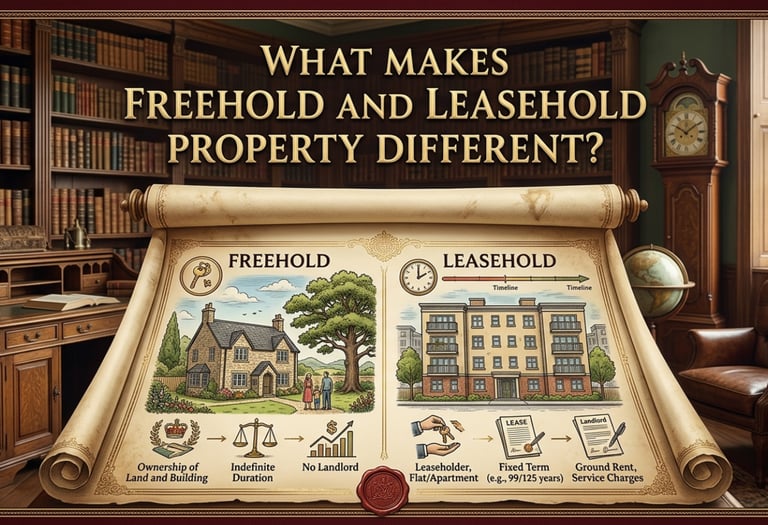
Ownership and Duration: A freeholder is the owner of the land and the building on it and he will never have to pay rent to anyone, the land will belong to him for ever. A leaseholder is only entitled to use and occupy the property for a specific period of time, and the ownership of the property remains with the lessor.
Transferability: Owners of the freehold estate can dispose of it in any way they want, such as selling, gifting or bequeathing it. Leaseholders may have contractual and/or statutory restrictions on subletting, assigning and/or mortgaging. When the government is the lessor, transferring is often not possible without permission.
Home Loans: Institutional Lenders are more willing to provide mortgage financing for a freehold property because it is perpetual and freehold. Leasehold properties are subjected to a higher degree of scrutiny, especially if the residual term is short; some lenders are not willing to lend on leasehold properties if the residual lease term is less than the loan term.
Market Value: Freehold property tends to have a higher market value than similar leasehold property. Leasehold property value is usually lower as the lease is near expiration, unless the lease is renewed or turned into freehold.
Leaseholders legal rights
Leaseholders have been consistently safeguarded by Indian courts against arbitrary eviction. A court may relieve the lessee from forfeiture under Section 114 of the Transfer of Property Act, 1882 with payment of rent in arrears, interest and costs of suit. The Supreme Court in the case of Karam Kapahi & Ors. v. M/s Lal Chand Public Charitable Trust (2010) 4 SCC 753 reiterated that this is an equitable and discretionary remedy, and is available to the lessee who approaches the court with good faith. In addition, State Rent Control legislation not only restricts the reasons for a lessor to seek eviction, but also restricts the amount of rent a lessor can charge, even if the underlying property is a freehold estate and not a leasehold estate.
Conveying Leasehold to Freehold
Some state governments and statutory authorities have established conversion schemes to allow leaseholders to either purchase the freehold title of their leasehold property or sell their leasehold title to the statutory body in exchange for a lump-sum conversion charge, which is normally a percentage of the property's circle rate or market value. On conversion, the leaseholder will be given a registered conveyance deed without the original lease conditions. Where leaseholders wish to sell or mortgage their asset, it is generally advisable to try to convert the property as early as possible, as the availability of freehold title will have a significant impact on the marketability and financing of the property.
Conclusion
It is clear that freehold and leasehold property have far reaching implications for both buyers and investors and for the lawyer. There is absolute, perpetual, and freely transferable ownership of property. Although leasehold gives the lessee a lot of rights while it is being leased, the rights are conditional, time limited and subject to the terms of the lessor. It is important to understand this difference in order to secure tenure as well as to finance, develop and realise the value of real estate in the changing urban land market in India.