When should you ask for money damages versus forcing someone to do what they promised?
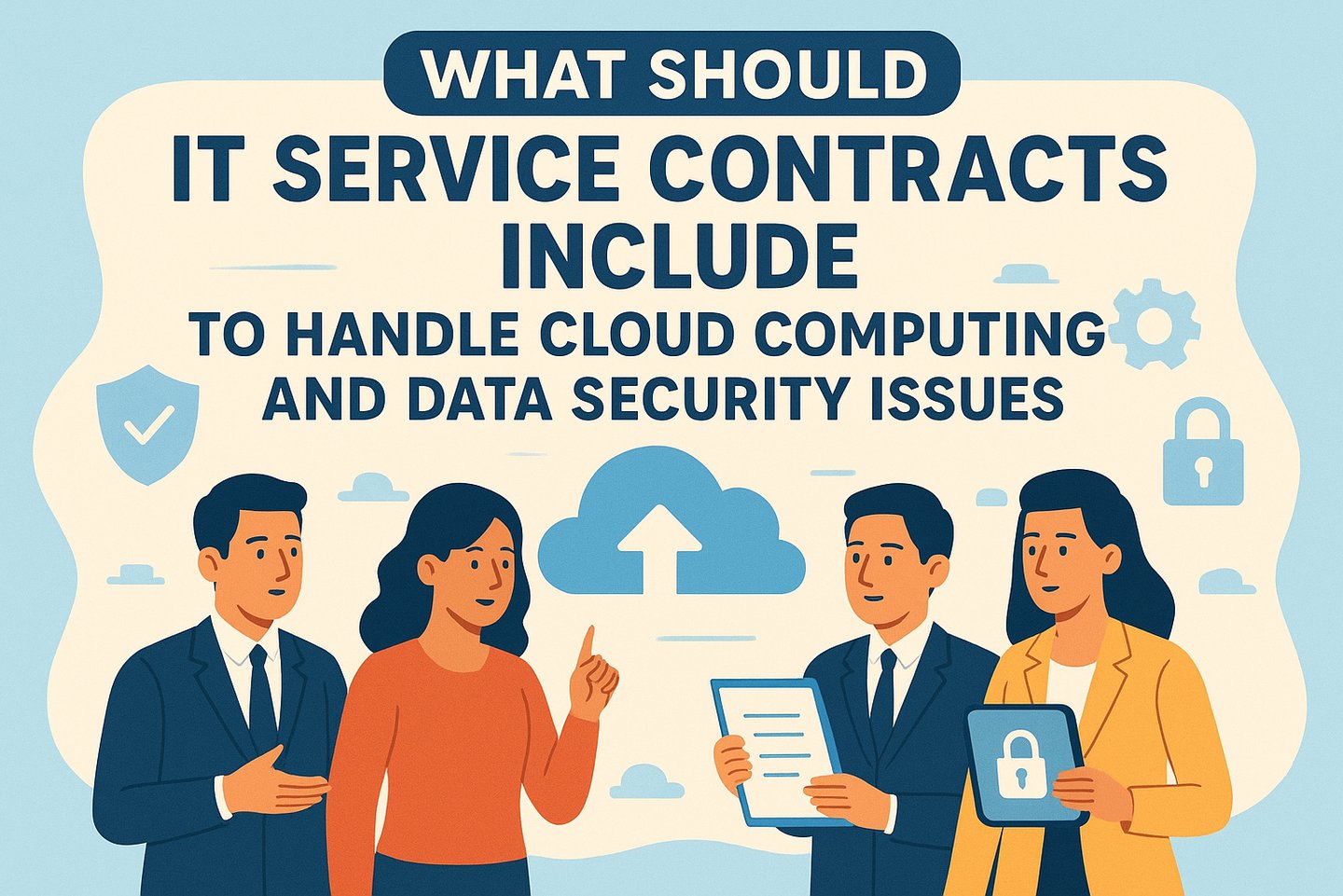
This article explains how well-structured IT service contracts safeguard data security in cloud computing by defining responsibilities, strengthening compliance, and reducing risks through essential protective clauses.
CORPORATE LAWS
Kasak Jagwani
12/5/20255 min read
INTRODUCTION
An IT service contract is a written agreement between your business and a trusted IT provider. It defines the level of service you will receive, including what’s covered, how quickly they respond, and the responsibilities of both parties. The growing reliance on cloud services has made the data valuable as well as vulnerable assets for the organization, and therefore, a well-drafted contract is no longer a technical formality but a core risk-management mechanism.
For most small and medium-sized businesses in the UK, a decision needs to be made. You can wait for things to go wrong and react when they do. Or you can take a proactive approach and partner with a managed IT provider under a formal support contract.
IT service agreements must comply with the relevant laws and regulations governing the IT industry. Each jurisdiction may have its own specific requirements, such as data protection, data residency, intellectual property rights, and cybersecurity. It is crucial to incorporate these legal requirements into the agreement to ensure compliance and mitigate potential liabilities. Consulting legal experts with knowledge of IT laws and regulations can help ensure that the agreement aligns with the applicable legal framework.
A study from Deloitte indicates that utilizing a managed services model can reduce IT costs by 20-30%, enabling organizations to reallocate resources to more strategic initiatives.
THE GROWTH OF THE CLOUD AND INCREASING SECURITY CONCERNS.
Cloud computing revolutionized everything. Modern firms employ SaaS (Software as a Service), such as Google Workspace or Salesforce; IaaS (Infrastructure as a Service), such as AWS or Azure; and PaaS (Platform as a Service) for development environments, to name a few. Nowadays, businesses rely on the infrastructure of outside providers rather than keeping their data on their own premises.
Cloud-based services are a vital component of modern IT environments, as it is thought that the cloud hosts about 60% of all business data worldwide. Cloud computing has several advantages, such as greater accessibility, flexibility, and scalability. Businesses may use these benefits to optimize their procedures and respond to changing market demands. Nonetheless, there are numerous issues with cloud computing, such as the intricacy of shared responsibility models, misconfigurations, and an expanding attack surface.
The main security concerns include, but are not limited to, data loss; the risks associated with insider threats, as the cloud's remote access and ease of sharing or exposing data might raise the possibility of security breaches; distributed denial-of-service (DDoS) attacks; account hijacking; phishing; ransomware; and other malware assaults. These assaults might lead to downtime, data loss, a drop in performance, and other consequences.
THE SIGNIFICANCE OF IT SERVICE CONTRACTS IN THE MODERN DIGITAL WORLD
Businesses now manage huge amounts of proprietary, financial, and personal information. Data protection legislation, such as the EU GDPR, India's Digital Personal Data Protection Act of 2023, and other international laws, establishes significant duties and punishments for data mismanagement.
Many businesses rely heavily on cloud, outsourced IT services, and data flow in today's high-performance digital environment. In order to guarantee that enterprises continue to comply with the shifting legislation governing data protection, these agreements clearly outline the responsibilities of the parties, the ownership of information, and the anticipated security procedures. In addition, they brought stability and order to a field that was otherwise very specialized. The contractual agreements of IT services also redefine the obligations and duties of the two parties. With comprehensive SLAs, breach notification requirements, and accountability provisions, they are safeguarding the consumers, but they are also placing operational expenses on the service providers, requiring ongoing improvements and adherence to high criteria. Businesses may benefit from increased transparency, fewer security threats, and higher continuity rates, but they may also be at a disadvantage due to their reliance on suppliers, their challenges in negotiating, and their inability to adapt when the conditions are set. Despite these drawbacks, the top IT service agreements continue to be the essential tool for fostering trust and maintaining secure online activities.
KEY PROVISIONS THAT ALL IT SERVICE CONTRACTS SHOULD INCLUDE FOR CLOUD AND DATA SECURITY
Including vital clauses in IT service contracts is essential in the present digital age in order to control cloud computing and address potential data security risks.
1. Rights to Data Access and Ownership:
Every IT service agreement should ensure unrestricted access to this data as well as the flexibility to export or transfer it as necessary. It must also be clear that the vendor is not allowed to utilize the data for analytics, profiling, or any other secondary use without authorization. This clarity helps prevent disagreements.
2. Responsibilities pertaining to confidentiality:
One of the most crucial aspects of any IT agreement is still the confidentiality agreement. They must apply to all employees, contractors, and other individuals involved in delivering services, and they must prevent the provider from sharing or using customer data unlawfully. It is crucial that these duties persist even after the contract has expired.
3. Incident Response and Breach Notification:
As specified by the contract, there should be a well-defined procedure for handling security events. This includes determining the rate at which the vendor should notify the client of the breach, the types of events that should be reported, and the level of collaboration during the investigation and corrective measures. Damage can be significantly lessened with a quick and synchronized reaction.
4. Agreements on the level of service (SLAs):
In addition to establishing the performance standards, SLAs also assure the client of consistent and dependable service. They typically include clear schedules for problem resolution, a backup and recovery procedure, and assured uptime rates.
5. Terms of Indemnity and Liability:
In the event of an eventuality, the vendor's responsibility is described in these clauses. They are needed to help ensure that the provider is financially accountable for cases of carelessness, violation of confidentiality, or noncompliance with data protection laws. The liability rules are straightforward and protect the client from unforeseen losses.
6. Protocol for Data Removal and Exit Management:
Finally, the departure procedure must be outlined in a well written IT service agreement. These would include offering the customer data in a usable format, deleting any copies of the data in the vendor's systems, and assisting with the transfer to a different provider. All of these precautions will guarantee that the information is not put at risk and that there is no vendor lock-in even after the deal is signed.
CONCLUSION
As organizations continue shifting their operations to cloud-based platforms, the role of IT service contracts becomes even more central in safeguarding business interests. The clauses discussed, ranging from data ownership to exit management, form the backbone of a secure and predictable digital environment. When these terms are clearly articulated and actively implemented, they not only reduce the risk of data breaches but also build a healthier relationship between service providers and customers. Moving forward, businesses must treat these contracts as living documents, reviewed regularly to match new technologies and evolving regulations. By combining strong contractual safeguards with continuous monitoring and responsible vendor management, organizations can confidently embrace cloud computing while keeping their critical data protected.