
Why Poor Pre-Litigation Documentation Weakens Legal Claims?
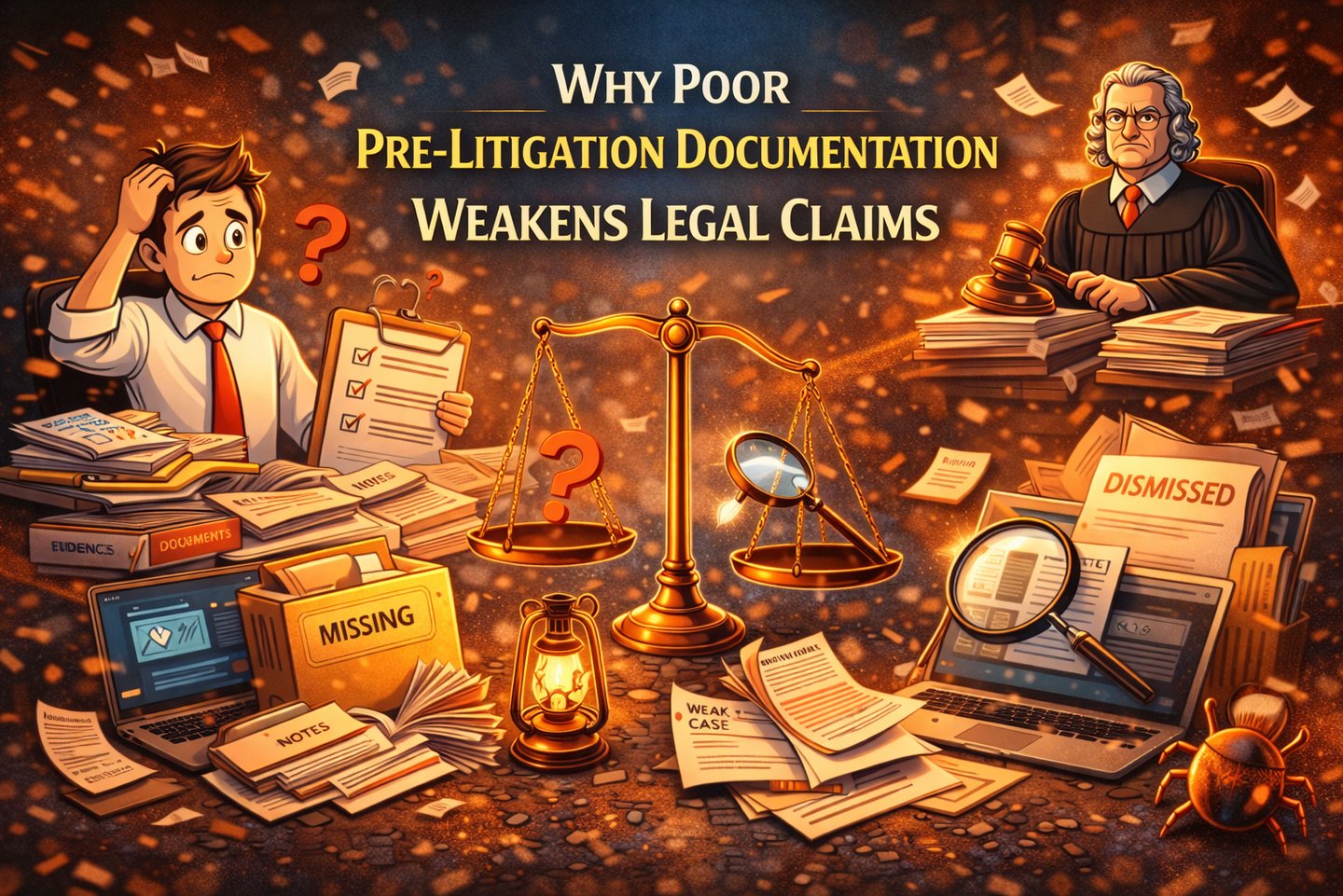
Pre-litigation documents are very important in legal disputes. When records are poor or missing, legal claims become weak, and courts may not be able to trust them easily.
CORPORATE LAWS
Sakshi
2/19/20263 min read
Introduction
Before a legal case is filed in court, many things happen between parties.
They talk, send emails, sign the agreements, raise the complaints, and sometimes they try to solve the problem. All the papers and messages that are created during this time are called pre-litigation documentation.
Many people think that only the court arguments matter. They believe that a good lawyer can fix everything later. But this is not true. Courts depend a lot on what happened before the case was filed. If there are no proper records, then even a real and honest claim can fail.
Good documentation helps the court to understand the problem clearly. Poor documentation creates confusion and weakens the case from the beginning only.
Meaning of Pre-Litigation Documentation
Pre-litigation documentation means all the written records are made before going to court. It includes contracts, bills, emails, letters, notices, payment proofs, and messages between the parties.
These documents show what the problem is and when it starts. They also show whether the parties try to solve the issue before starting a legal case.
Courts often look at these records first to understand the background of the dispute.
One major problem with poor documentation is loss of trust. Courts expect parties to be honest and consistent. If the early documents do not match what is said later in court, the judge may doubt the claim.
Missing or unclear records look as if facts are being added later.
Once the court stops trusting a party, it becomes very hard to win the case.
Courts will decide cases based on the proofs. Documents become stronger proof than spoken words. If proper documents is not available, it becomes hard to prove the important facts.
Written records are very important. Oral statements alone are usually not enough; if documents are missing, the court may reject or reduce the claim.
Sometimes, the court may think that the missing documents will go against the party who failed to keep them.
Many laws require certain steps that need to be followed before filing a case. Many disputes become serious only because early communication was unclear or not written properly. Small mistakes in record-keeping at the beginning can turn into big legal problems later. Written documents help avoid misunderstandings between parties and reduce false claims.
Courts often believe written proof more than memories or verbal explanations. When records are missing, judges have to guess facts, which usually harms the party making the claim. Proper documentation also helps lawyers understand the issue faster and give better advice.
Keeping records shows that a party acted responsibly and with good intention. Even simple notes or confirmations can become important evidence during a legal case. Good documentation saves time, money, and stress during long legal proceedings. Many legal disputes could be avoided if records were maintained carefully from the start.
Writing things down early helps avoid arguments later about who said what. When documents are clear, courts can decide cases faster and more fairly. Poor records often waste the court’s time and increase legal costs for both sides. Good documentation shows seriousness and care in handling a dispute.
If these steps are not properly documented, the case may not properly be filed. Notices may be considered as invalid, or procedures may be treated as incomplete.
In some cases, the court may dismiss the case, as the proper steps were not followed and recorded properly.
Good pre-litigation documents can help to solve the disputes without going to court. Clear notices and proper records helps so that the other party will take the case seriously.
Poor documentation can create confusion and arguments. Unclear letters or unsupported claims may not result into solutions.
Courts expect the parties to resolve disputes before filing the cases. Poor records may show that the was no real effort was made.
When someone asks for money in a legal case, they must show first show proof, bills, account statements, and payment records.
If these documents are missing, courts may refuse to give compensation to the party. Even if loss is real, it must be proved properly. Claims without proof may be rejected.
Poor documentation also can create problems in the case. It can limit the arguments and can make the case weak. Lawyers may need documents to understand the matter clearly and help to prepare strong arguments. Without proper records, it becomes very difficult to plan the case properly.
It is not difficult to keep proper records. Only simple steps like saving the emails, keeping the copies of the bills, and writing clear and appropriate letters can make a big difference.
Proper legal advice can also help to ensure that documents are prepared correctly. Clear and honest documentation helps to protect the legal rights and strengthens claims.
Conclusion
Pre-litigation documentation plays a very important role in legal cases. Poor records can damage trust, weaken the proofs, or cause legal problems. Courts rely heavily on documents that are created before the case is filed. Keeping clear and proper records helps ensure that legal claims are strong and fair.